
The European Union (EU) announced on March 23, 2026 that their landmark free trade deal with the South American Mercosur bloc will provisionally come into effect from May 1.
The sweeping deal has now been ratified by all four of the South American states that make up the union – Brazil, Argentina, Uruguay, and Paraguay. In 2024, the EU was Mercosur’s second most important trading partner, with exports totalling €57 billion.
“Today is an important step in demonstrating our credibility as a major trading partner. The priority now is turning this EU-Mercosur agreement into concrete outcomes, giving EU exporters the platform they need to seize new opportunities for trade, growth and jobs,” said EU Trade Commissioner Maroš Šefčovič.
The trade deal could lift $4.7 billion USD (€4.02 billion) on export duties for the 27 member states that make up the EU. The area covered by the deal is populated by 720 million people, whose countries’ are “close allies and like-minded partners with a shared commitment to multilateralism and rules-based international trade,” according to the EU.
Supporters have claimed that it will decrease the Union’s reliance on mineral trade with China and allow it to circumvent volatile U.S. tariffs, while critics warn of the risks for European agricultural producers who will have to compete with lower prices.
Following over two decades of negotiations between the two political bodies, the agreement was signed in Asunción, Paraguay, on January 17. However, it has faced multiple obstacles since this consensus, including street protests on the part of European farmers.
In a vote on the deal on January 21, France, the EU’s leading agricultural producer, voted in opposition, alongside Ireland, Hungary, Austria, and Poland.
A legal challenge was also instigated by the European Parliament in January, which petitioned the European Court of Justice to assess the agreement’s legality within existing EU treaties.
The EU Commission President Ursula von der Leyen then announced in February that the deal would be provisionally enacted, despite a lack of approval from the EU Parliament. French President Emmanuel Macron labelled the move “disrespectful” and a “bad surprise”.
The EU Commission claims it will increase bilateral trade and investment between the two bodies whilst also supporting sustainable development initiatives. Von der Leyen has defended the deal that she says will give “Europe a strategic first-mover advantage in a world of sharp competition and short horizons.”
The most recent Mercosur member, Bolivia, has not been party to the trade negotiations but could be set to join the agreement in the coming years.
Following his meeting with Venezuelan interim president Delcy Rodríguez, Colombian President Gustavo Petro also expressed his desire for the two countries to become full members of the trade bloc.
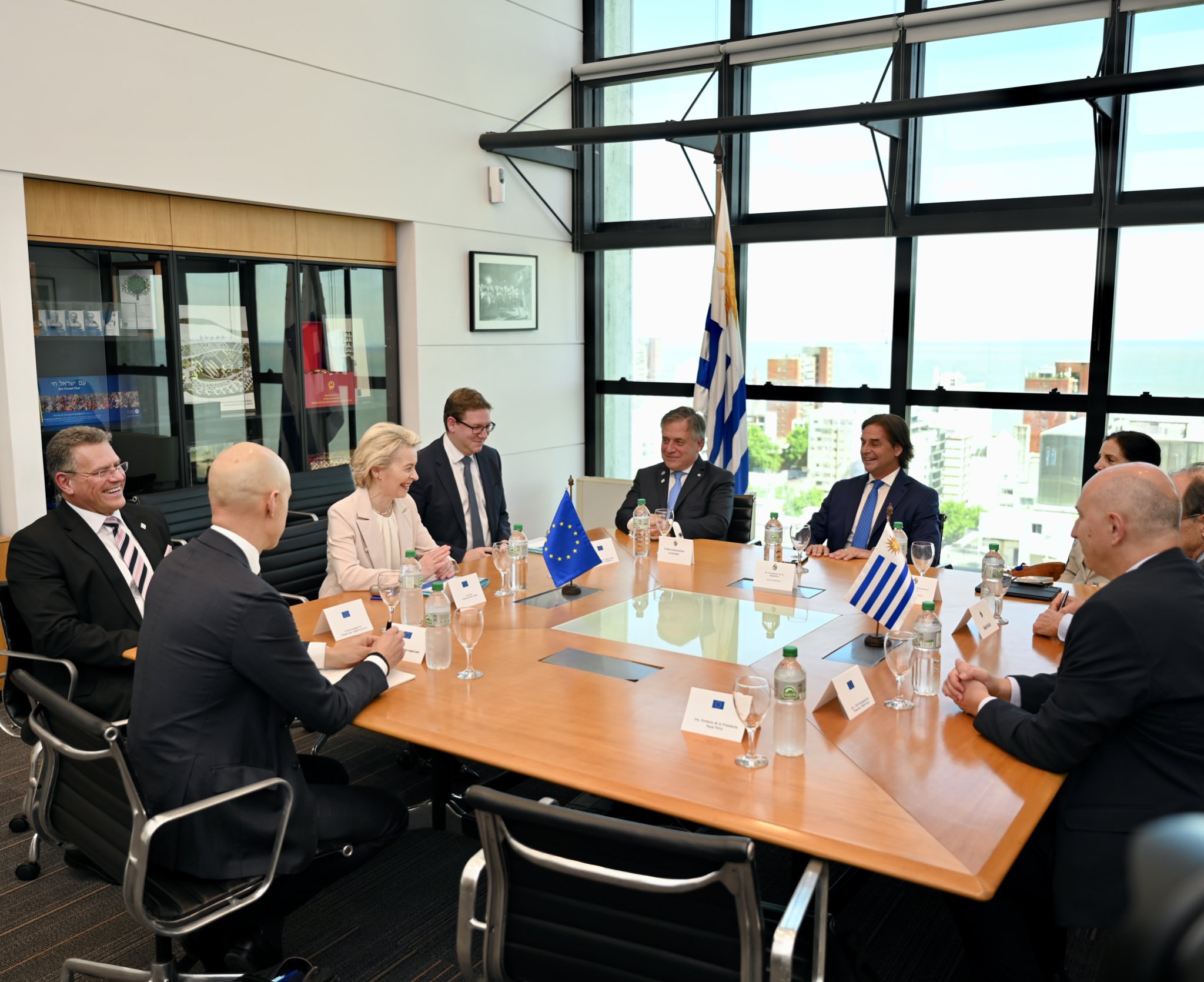
Featured image: Ursula von der Leyen via X.