
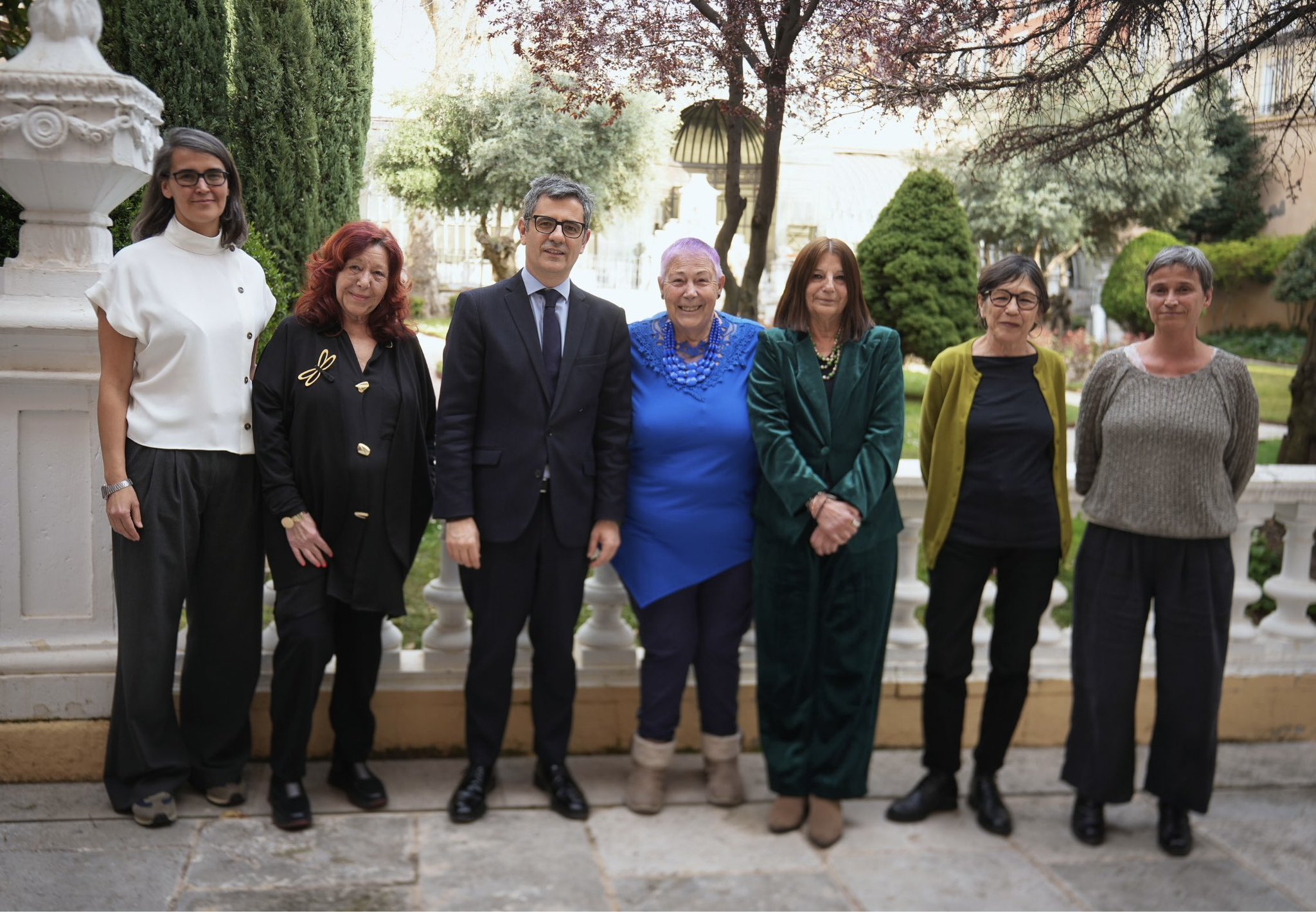

Spain has formally pardoned 53 women who were incarcerated in moral reformatories for “fallen women” between 1941 and 1985 in a ceremony held in Madrid on Friday, March 20.
The survivors of the Patronato de Protección a la Mujer (Women’s Protection Board) have now been recognized as victims of the regime of dictator Francisco Franco, who ruled Spain from 1939 to 1975.
The Francoist military authoritarian dictatorship was characterized by repression and autarchy. Historians estimate that as many as 145,000 people were killed by the State under the dictator, although most executions happened extrajudiciously.
The women’s pardoning was organized by a government commission set up last year to celebrate half a decade of Spanish democracy, alongside the Ministries of Democratic Memory, Justice, and Equality. A ceremony was held in Madrid’s National Music Auditorium.
The Patronato was headed by Franco’s wife, Carmen Polo, while centres were managed by religious orders. Women were detained for falling pregnant outside of marriage, protesting against the dictatorship, or wearing what the regime deemed inappropriate clothing – like mini skirts.
Many women who were victims of sexual abuse or incest were also sent to reformatories to avoid bringing shame on their families.
Within the reformatory walls, adolescent inmates suffered psychological and physical abuse, with religious orders often profiting off of their forced labour. Unmarried mothers who gave birth could have their newborn babies forcibly removed.
The survivors who attended the ceremony in Madrid were handed documents that recognize them as victims of the Francoist dictatorship – one of the symbolic reparation schemes laid out in the Democratic Memory Law of 2022, which did not mention former Board inmates.
Esther Gil de Reboleño, representative for the left-wing party Sumar in Spain’s Congress, told EU Reports that “for far too long, democratic memory has been constructed from an incomplete perspective, focusing heavily on traditional political repression and far less on the specific forms of violence suffered by women.”
“When the state asks for forgiveness, it is not doing a favor; it is acknowledging a democratic debt. And that gesture will only be credible if it is accompanied by documented truth, public recognition, symbolic and institutional reparations, and measures that guarantee non-repetition,” she added.
Last year, an apology offered by the Spanish Conference of Religious Orders (CONFER) was rejected by survivors who interrupted proceedings to demand “truth, justice and reparations.” Many felt that the apology was incomplete, as it lacked a full admission of institutional responsibility for all of the instances of abuse suffered by the women.
Survivors hope that the state’s apology will continue to raise awareness of the actions of the Board and lay the foundations for further research.
“We are not ghosts, we are living and we are telling our story; we have already been silenced enough and we are not going to stop,” Consuelo García del Cid, who was sent to a reformatory by her parents as a teenager, told EU Reports.
“A country that conceals, denies, or lies about its own history is irrevocably doomed to repeat it.”
Featured image: Via Ministerio de la Presidencia, Justicia y R. Cortes on X.