
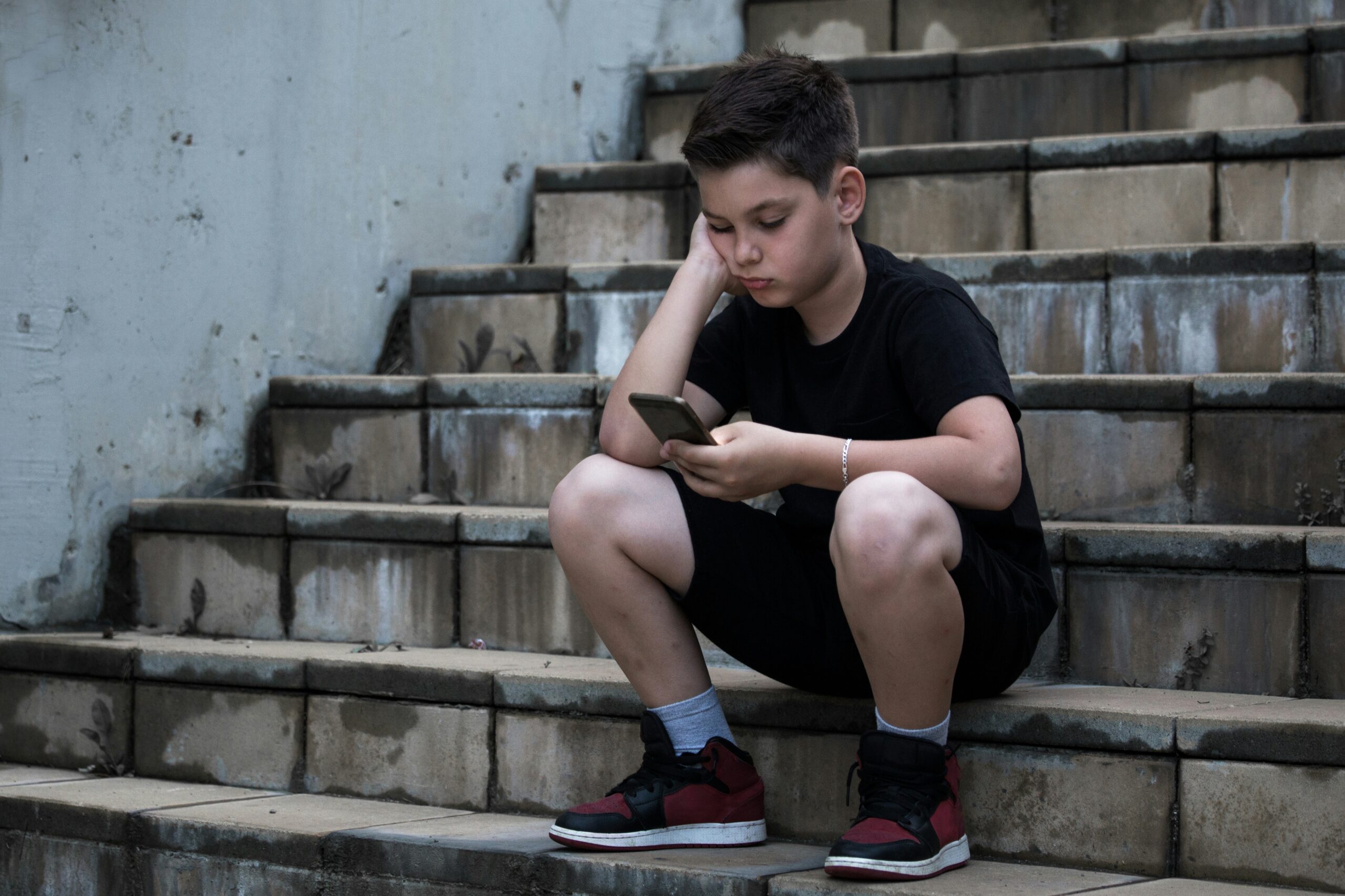

Portugal has approved plans to ban the use of social media for children and teens under 16, bringing the age barrier up from where it currently stands at 13.
The bill to implement such a ban was passed on February 12 by the Portuguese Parliament on its first reading. It was put forward by the country’s governing Social Democratic Party (PSD) who have stated that such a move is vital in order to protect minors from accessing harmful content online.
The legislation is designed to fill what it describes as a regulatory gap that has allowed “multinational digital platforms to set rules unilaterally.”
“We have to protect our children,” stated PSD lawmaker Paulo Marcelo. “We don’t intend to prohibit for the sake of prohibiting, we intend to create a norm to give more power to parents and families, to accompany and control.”
Under the bill, no one under 16 will be allowed to access social media networks and other platforms without the consent of parents or guardians. The new limitations are expected to cover Meta services including Instagram and Facebook, as well as other social media giants such as TikTok; WhatsApp, however, is excluded.
To ensure compliance, Portugal will use the Digital Mobile Key, a secure authentication system, which will verify the age and identity of users.
The bill did raise some concerns among opposition politicians, with some querying its practicalities in respect to the privacy of individual users – as well as the possibility of loopholes such as VPNs.
Only a few legislators were outright opposed to the bill in principle. Notably, a number of right wing politicians, including representative Madalena Cordeiro of the Chega Party, described it as “a project that tries to take away freedoms.”
A growing wave
This move by Portugal makes it the latest European country to look at such bans in the month since a landmark vote in France.
France’s National Assembly had voted to ban social media for all those under 15 years old at the end of January, with support from President Emmanuel Macron as well as an overwhelming majority of Assembly members.
“We cannot leave the mental and emotional health of our children in the hands of people whose sole purpose is to make money out of them,” Macron had stated.
Europe’s push toward age-restricted social media came following a pioneering bill by Australia in late 2025, alongside similar plans announced at the same time by Danish Prime Minister Mette Frederiksen.
Following the vote in France, a wave of other European nations have followed suit and announced similar plans, with Spanish Prime Minister Pedro Sánchez also announcing his intention to pursue a ban for under 16s at the beginning of February.
Italy is currently in the process of reviewing similar proposals after a bill to the same effect was introduced in early 2025, whilst the UK appears to have rowed back on the idea of a full ban after it was proposed by Prime Minister Keir Starmer in reaction to explicit and illegal material being created without consent through Grok.
The UK has since required age verification for any sites found to be containing explicit adult or otherwise harmful material.
Meanwhile, Greece had previously announced that it was “very close” to proposing such a ban in early February 2026 – around the same time as Spain and Portugal. An official announcement of this has now reportedly been shelved until early March, although the process will still move ahead with the direct involvement of the Ministries for Justice, Digital Governance, and Health – and is being personally overseen by Greek Prime Minister Kyriakos Mitsotakis.
Similarly, in Germany, several of the country’s major parties – including both the centre-left Social Democratic Party (SPD) and the centre-right Christian Democratic Union (CDU) have independently put forward motions to bring through bans on social media for under 14-year-olds. Other parties have also expressed support for the proposals, including the Greens and the left-wing Sahra Wagenknecht Alliance, with only the far-right Alternative for Germany (AFD) remaining resolutely opposed to such a motion.
German Chancellor Friedrich Merz has suggested he would be open to such proposals, although whether this would be allowed under EU law is up for debate.
Where Next?
Stephan Dreyer, a media law expert in Hamburg, has pointed out that the EU’s Digital Services Act mandates shared regulations across all member states.
But, with so many EU nations calling for greater online regulations, this raises the possibility of whether such bans might become common policy at the European level.
Greece has been amongst those pushing for tighter regulation across the whole of the EU, whilst European Commission President Ursula von der Leyen has supported action following the model of Australia.
The European Parliament had previously put forward a resolution in October 2025 calling for a “digital age limit” and for stricter online protections. However, this would require a full proposal from the European Commission, and agreement from member states before it could be enacted as law.
A Europe-wide ban would likely further raise many of the same concerns around enforcement, as well as the possibility that it might simply have children circumventing age checks through use of VPNs or using malicious sites.
Meanwhile, prominent figures within the social media industry have attacked proposed bans as dangerous to freedom of speech. Elon Musk had previously described French authorities’ investigations into Grok and its offices as a “political attack” and labelled Spanish Prime Minister Sánchez as “a tyrant and a traitor to the people of Spain.”
Others argue that, whilst moves towards further regulations are welcome, the proposals made by the EU and its member states likely do not go far enough to be effective.
Professor Nick Couldry of the London School of Economics argues that age-based bans on social media are a half-measure at best; they will do nothing to tackle the toxic business models used by the biggest social media giants, which drive polarisation, poison politics, and pose risks to everyone – not just young people.
“While they seem radical, they address only half the problem,” Couldry told EU Reports. “Such bans target specific platforms only, leaving space for obvious work-arounds, punishing young people in a discriminating way. For all those reasons, age-related bans are a costly distraction from the core issues.”
Couldry has welcomed these initial moves being put forward across Europe but maintains they need to go further.
“The way the European Commission is enforcing its recent legislation is starting to target social media’s business model de facto, and this is encouraging,” he said.
“This should be explicit from the start. We should not permit any social media businesses that make money out of shaping and nudging our social life.”
Featured image: Getty Images via Unsplash+