
February marks the start of official campaigns for Hungary’s upcoming Parliamentary election, perhaps among the most consequential ones to be held in Europe this year.
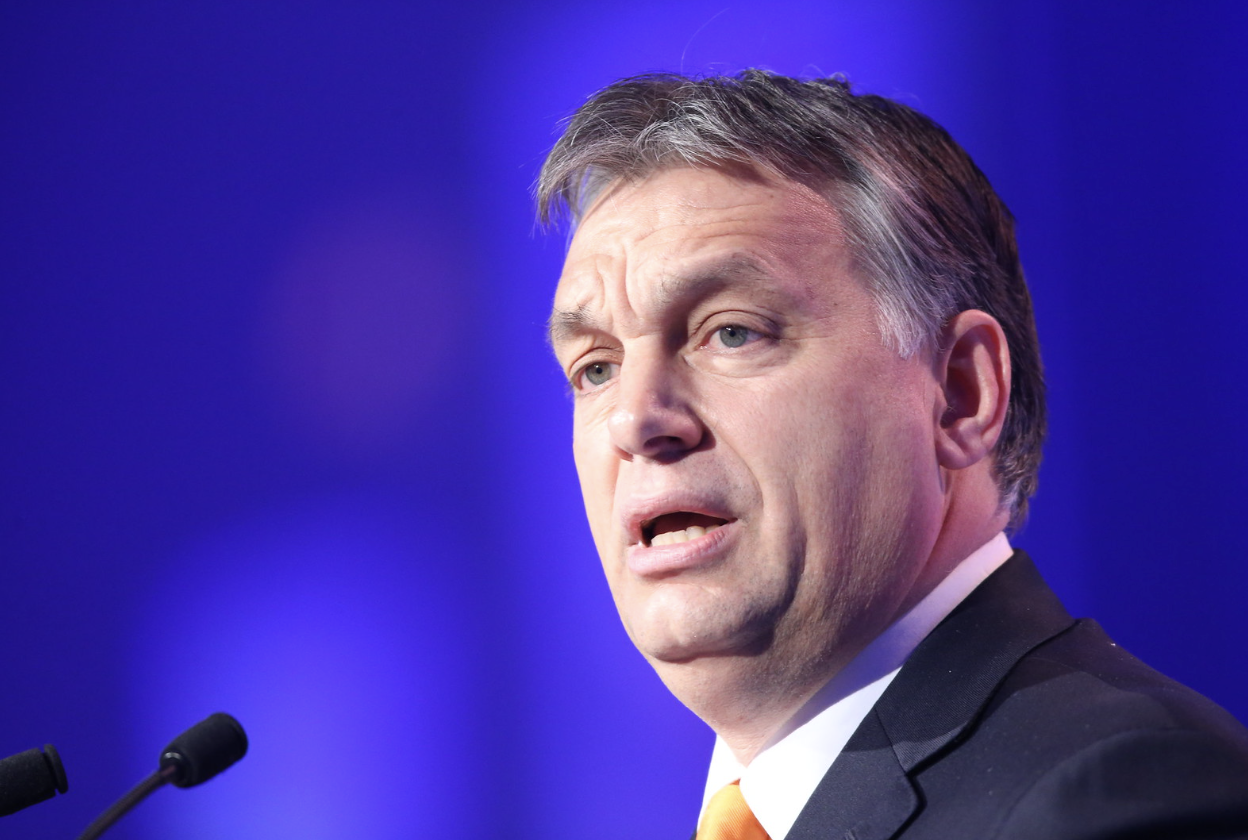
For almost 16 years, Hungary has been governed under the self-styled “illiberal democracy” of Prime Minister Viktor Orbán, a right-wing populist frequently compared to figures like Trump, and his national-conservative party, Hungarian Civic Alliance (Fidesz).
This regime has been much criticized for eroding democratic norms, with a media that is heavily biased towards the government, and accusations of widespread corruption and gerrymandering. Under Orbán, Hungary has been the sole EU member state to be described by Freedom House as only “partly free”.
Orbán has further drawn criticism internationally for interfering with the courts and judiciary, strict anti-migrant laws, and repression of the LGBTQ+ community; as seen last year with the banning of Pride events, following previous bans on same-sex marriage and adoption.
Perhaps most pressingly for the EU, Orbán has also maintained close relations with Putin, even following the war in Ukraine. Hungary has taken a leading role within the EU’s anti-Ukraine bloc alongside countries such as Slovakia and Bulgaria, voting to prevent or delay aid to Ukraine and sanctions against Russia.
This has been met with calls to strip Hungary of its voting rights within the EU, as well as a freeze on EU funds worth billions going into Hungary, worsening the country’s cost of living crisis, and prompting Orbán to look for alternative investment from the likes of China and the Trump administration.
An unequal playing field
Going into the election, the political and media landscape in Hungary still appears highly stacked in Fidesz’s favour. The country’s public broadcaster has repeatedly aired Fidesz campaign videos and talking points during news segments, whilst newspapers and other independent media have been shut down or taken over by oligarchs sympathetic to Fidesz.
Press watchdog Reporters Without Borders noted that Fidesz controls around 80% of the traditional Hungarian media, whilst as much as 87% of the money spent on political advertising across Google and Meta over most of last year came from pro-government actors.
Previous elections have seen the government introducing additional benefits for potential supporters, or threatening dismissals for public sector workers, whilst changes to the constitution have seen constituency borders being redrawn to benefit Fidesz.
So-called “voter tourism”, whereby voters can register from anywhere in the country, has also helped to tilt electoral outcomes in areas where competition has been tight, as has the extension of voting rights to ‘near-abroad’ Hungarians outside the country, and the curtailing of voting rights for minority voters, such as Roma people.
Change at last?
Despite this, opponents of Orbán have been cautiously optimistic this time around about the chances of the main opposition party, Respect and Freedom Party (Tisza), a liberal-conservative and pro-European party. Under the leadership of Peter Magyar, it has been leading in the polls over recent months.
Magyar is himself a former member of Fidesz, who has been reticent on there being any change in policies towards migration, or support for Ukraine. However, he has called for normalization of relations with Brussels, and tackling the corruption seen under Orbán.
Magyar has presented the upcoming election as a referendum on Hungary’s place within both NATO and the EU, stating: “Hungary must once and for all take its place at the table of the West. Our place is in Europe; it always has been and always will be.”
Whereas the opposition had been divided in previous elections, it appears likely that Magyar will be able to secure a broad range of support for himself, including from those further to the left.
Hungarian political analysts have also dismissed the notion that opposition parties like Tisza might actually be banned outright, or that the final outcome of the election could be directly altered through hacking IT systems or mass mail stuffing.
What will this mean?
It is likely that this election could still go either way, with analysts predicting that the most likely outcomes will be outright majorities for one or the other of these two main parties.
Turnout will likely be much higher than at the last election – perhaps around 75 to 80% of voters, up from 70% at the last two elections – with both parties expected to be able to mobilize large numbers of supporters.
Much will depend on a critical number of undecided voters, as well as on whether the winning party is able to gain a more-than-two-thirds majority in the Hungarian Parliament.
“If Tisza wins with the constitutional majority, complete regime change is the most likely scenario,” said Bulcsú Hunyadi, Head of Programmes at Political Capital, a research institute based in Budapest.
“That will mean a completely new chapter in Hungary’s political life. In terms of EU relations, we can expect rapid improvement, and that some EU funds will be unfrozen,” he told EU Reports.
If Tisza wins only a slim majority however, it’s speculated that there will only be limited institutional change, with many of the frameworks that Fidesz have put in place potentially paralyzing attempts at genuine reform.
At the same time, much of Hungary’s foreign policies are unlikely to change, whilst a program of austerity also appears likely to be implemented regardless, given the current state of the country’s finances.
Meanwhile, if Orbán manages to prevail yet again – in what would be his fifth election win in a row – it’s probable there will only be a further cementing of his regime’s grip on power.
“It will be basically the story that we have already known for 16 years. We can expect to have the same strategy by Fidesz that we have seen for the last couple of years, trying to reduce the remaining autonomies in terms of municipalities, in terms of the independent media, and civil society,” Hunyadi noted.
“And I think the main lesson for Fidesz will be that further repression or suppression will be the way forward.”
The stakes for the outcome of this election could not be higher, with it still being all to play for over the next two months. Campaigns are set to start from February 21, with the election itself scheduled for April 12.
“We can surely say that this is the most exciting election, maybe not just since 2010, but since 2002,” stressed Róbert László, Elections Specialist at Political Capital.
“I think that was the last election where the competition was really open, and until the last moment, nobody could predict who would be the winner.”
Featured image: European People’s Party via Flickr.