
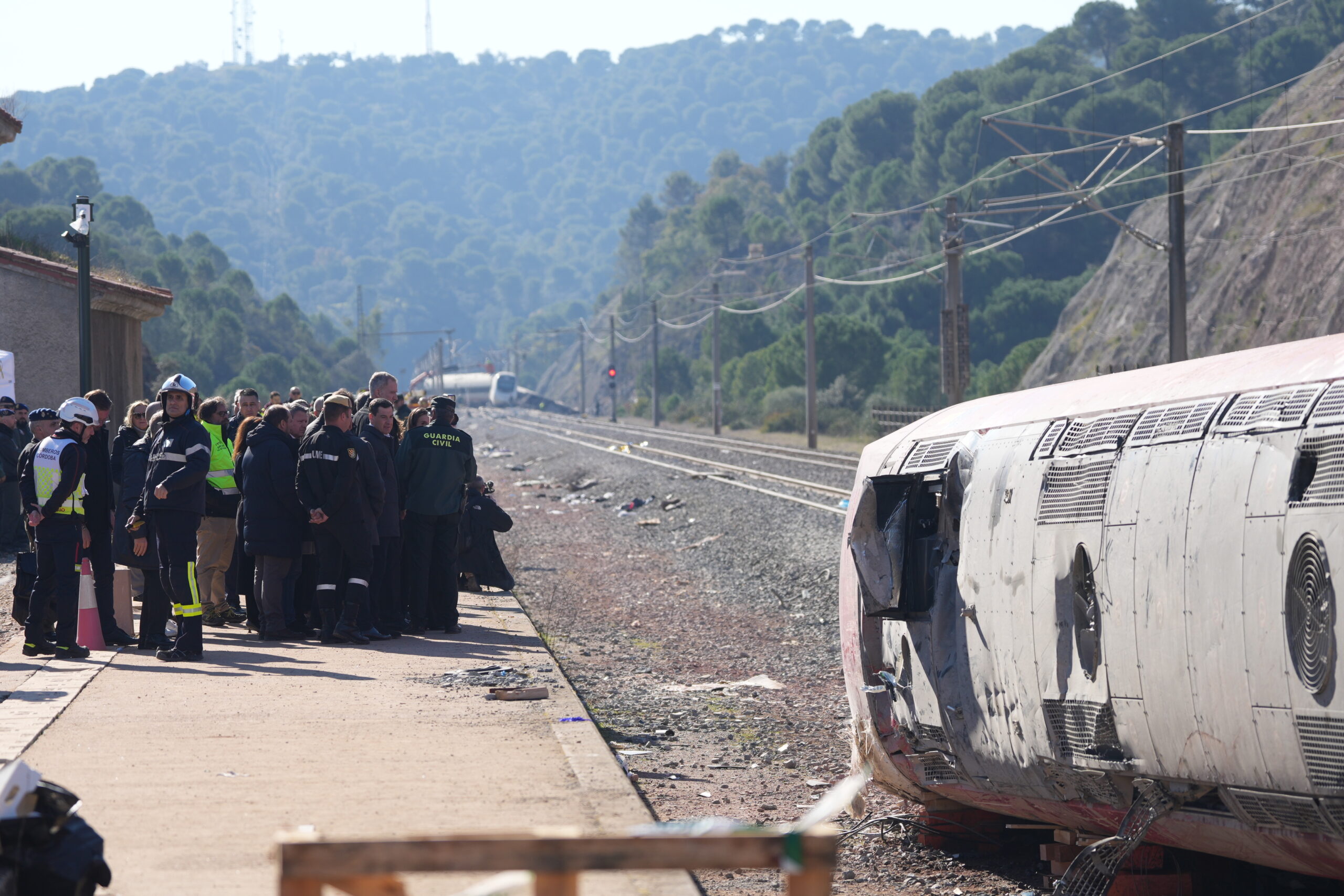
London, England – Spain has seen a wave of public indignation over Prime Minister Sánchez’s absence from the country in the days following a deadly train accident on January 18, 2026, which left 45 people dead and more than 150 injured.
While Sánchez was in the country on the day of the accident and visited the place of the incident on the morning of January 19, he was absent on the funeral day held in the southern city of Huelva on January 29.
Following the funeral, the hashtag #SánchezAusente (Sánchez Absent) trended on social media platform X for two consecutive days, reflecting public frustration over the prime minister’s absence during a moment of national mourning.
Beyond social media, criticism also emerged in traditional media. Spanish radio station Onda Cero Radio launched a public poll asking: “Do you believe Sanchez’s decision not to attend the Huelva funeral was correct?” Between 80% and 90% of respondents answered negatively, criticizing not only his absence from the funeral but also his decision to continue international engagements during the investigation period.
Sánchez’s office defended the decision, citing his attendance to an emergency European Council summit in Brussels on January 29. The meeting called EU leaders to discuss escalating geopolitical tensions, including disputes related to U.S. policy initiatives – such as suggestions of future American interventions in Greenland.
Read more: Greenland emerges as new focus of U.S. geopolitical ambitions
Deeper roots of public resentment
Despite promises by Spanish transport minister Óscar Puente to pay €20 million ($23.6 million USD) to the train disaster victims, dissatisfaction has not subsided, instead exposing broader concerns over long-standing issues in Spain’s rail infrastructure and government oversight.
While in conversation with EU Reports, Francisco Sánchez, director of the Institute of Ibero-America at the University of Salamanca, explained that the rail crisis represents a profound level of mismanagement within the Ministry of Transport.
He pointed to previous scandals involving senior figures in the ministry, including allegations of sexual misconduct and the misuse of public funds for personal expenses, which had already eroded public trust before the train accident occurred. As per the scholar, the appointment of unqualified individuals to senior positions further weakened confidence in the government of Pedro Sánchez.
Public disillusionment was intensified by the so-called Koldo Case, in which individuals involved in alleged corruption schemes reportedly recorded illegal transactions to later blackmail associates.
“This tragedy is the logical outcome of these systemic issues,” said Francisco Sánchez.
The Spanish government currently defends its rail investment record, with Minister Puente claiming that €30 billion ($35.4 billion USD) in funding was withheld from the sector between 2011 and 2018, contributing to current vulnerabilities.
Further government response
Alongside the compensation package, teams from the government, infrastructure manager Adif and rail operator Renfe, are carrying out urgent inspections and repairs at 30 priority locations across the network.
On January 28, Minister Puente further announced that the comprehensive renovation of the high-speed rail lines would be advanced to 2026, moving the timeline forward by a year from the original 2027 forecast.
Nonetheless, Reuters reports that political pressure on the government remains high. The train crash reignited heated opposition debates regarding corruption within Sánchez’s inner circle, keeping tension elevated. This is reflected both in ongoing polls and in continued criticism from opposition figures on social media, including posts by political activist and journalist Vito Quiles, who has accused Sánchez’s party of deep-seated corruption.
Featured image: Adamuz train accident, January 2026
Source: Junta de Andalucía via Wikimedia Commons
License: Creative Commons Licenses