


London, UK – Following a vote on December 17, 2025, the EU Parliament will be asking the European Commission to create a fund supporting EU citizens forced to travel for abortion care.
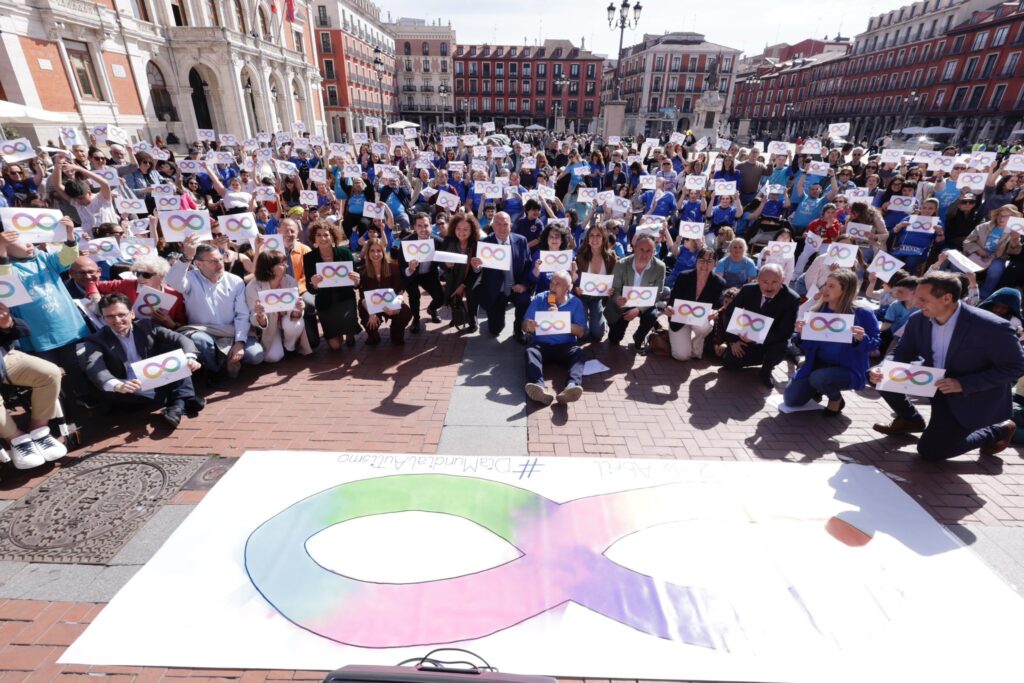
The vote took place after a European Citizens’ Initiative called My Voice, My Choice obtained 1.2 million signatures from people across the EU, demanding the creation of an opt-in financial mechanism for member states to provide monetary support to those seeking safe abortion care.
Jerca Freilh, content creation lead for My Voice, My Choice, explained that the idea for the campaign came about when coordinator Nina Kovac witnessed the lack of abortion access in the United States after the landmark Roe v. Wade Supreme Court decision was overturned in 2022.
“She thought, ‘We can do something to protect women on the European level’,” Freilh told EU Reports. “We know that the situation with abortion in some countries is really hard. Abortion is not accessible, it’s not legal, or is very expensive.”
Abortion laws differ across EU countries. In Poland and Malta, abortion is highly restricted, while France and Sweden provide robust legal protections for people seeking abortion.
Dr. Isabel Stabile, gynecologist and member of Doctors for Choice Malta, described the situation in her country as “fairly dire.” Doctors for Choice Malta estimates that at least 300 women in the country have an abortion illegally each year, with at least 100 travelling internationally to do so.
“The My Voice, My Choice proposal, if it becomes law — and of course, there’s still a number of hurdles to overcome — would significantly assist this situation,” said Stabile while in conversation with EU Reports.
Even in countries where abortion is legal, other factors may require people to travel outside of their local area to access abortion care.
According to Camille Kumar, Managing Director of UK-based Abortion Support Network (ASN), “legal doesn’t always mean accessible” when it comes to abortion care. In 2025, ASN supported 1,121 people travelling to access abortion through their helpline and mutual aid fund services.
“Abortion stigma is creating conditions that enable other barriers to pop up around the place,” she said.
She pointed to mandatory waiting periods, people exceeding term limits for abortion care in their home country, and medical professionals “conscientiously objecting” to providing abortion care as factors preventing people from accessing care where they live.
When someone has to travel for an abortion, the associated costs can become a financial burden. Kumar said that people who come to the ASN for financial support need on average £1,000 (€1,154), emphasizing that this cost is quite significant for people in countries with weaker currencies or lower salaries who have to pay medical fees in euros or pounds. In addition to travel and clinic fees, costs could include taking time off from work, arranging childcare, or obtaining travel documents.
“If the European Union would help with [the costs], it would be much better for organisations helping women, of course, for women that would get the abortion care that they need,” said Freilh. “This is what we are trying to propose with this European Citizens initiative, so that every person who needs this basic health care would get it.”
How would the initiative be implemented?
In March 2026, the EU Commission will decide whether they move forward with implementing this initiative.
“We are doing everything we can to make sure that it will be accepted,” said Freilh. My Voice, My Choice continues to communicate about their initiative online, and is trying to garner support from European leaders. They’ve already received expressions of support from France’s Emmanuel Macron, Spain’s Pedro Sanchez, and Slovenia’s Robert Golop.
Nevertheless, even if the initiative is approved, pro-choice advocates such as Stabile and Kumar are uncertain about how it will be implemented.
Stabile is primarily concerned with how the funding will be distributed; the initiative proposes an opt-in system where countries willing to provide abortion care to people from across the EU receive funding. Malta, however, would never agree to offering such care, leaving Maltese abortion seekers to “rely on the goodwill of other countries who would be willing to pay for all these women to access these services.”
For Kumar, one of the main concerns is whether abortion seekers will have to meet potential criteria to benefit from the scheme, such as being EU citizens or residents, being at certain stages of the pregnancy, proving their financial situation, or even justifying why they’re having an abortion. Many of ASN’s service users are in precarious situations, facing challenges such as homelessness, insecure immigration status, or domestic abuse.
“We know that one of the reasons our work is successful and that people trust us is because we don’t ask a lot of questions,” said Kumar. “We don’t need a justification. I think that’s a very different experience for those people who call us to what they’ve experienced if they have tried to access it through a healthcare system.”
To access support provided by an EU-funded scheme, abortion seekers would have to be aware of the options that exist outside of their country. However, healthcare providers may not always inform their patients of these options. According to Stabile, this could be the case in Malta.
“Imagine the law passes, there’s no bureaucracy, the money can be accessed very easily,” she said. “The problem still remains that within our island, doctors are unwilling to discuss that option with their patients.”
Freilh said that My Voice, My Choice is currently focusing on getting the initiative passed by the European Commission. She hopes that the EU Parliament approval will increase their chances, noting that similar initiatives failed in the past because they lacked this support.
Towards safe abortion care for everyone
“The reality is that every single country in the EU restricts abortion access in some way,” said Kumar. In particular, she explained that term limits, which vary by country, can serve to restrict abortion care even in countries where it’s fully legalized.
For example, the ASN gets the third-highest number of calls from France, where abortion is enshrined in the constitution. However, after 14 weeks, pregnant people can no longer receive an abortion in the nation and have to travel to countries with longer term limits, such as the UK and the Netherlands.
Similarly in Ireland – another high service area for the ASN – long waits for GP appointments and a mandatory waiting period of three days causes people to exceed the term limit of 12 weeks.
In Malta, Stabile argued that even if the cost is covered, the practicalities of getting an abortion abroad can be prohibitive.
“It doesn’t really make sense for women to travel to have a medical abortion, the only sense it makes is that it’s still illegal,” she said. “The Maltese government is still very much unwilling at this point to consider legalizing.”
The EU can’t mandate each member state to legalize abortion, but Kumar welcomes My Voice, My Choice’s push for the EU to intervene where they have the power to do so.
“I think it’s hugely symbolic to mobilise that many people when we always struggle with this feeling that people don’t realise how urgent this problem is in Europe,” she said.
Freilh also acknowledged that there’s more work to be done to ensure that all Europeans have access to safe abortion care.
“I’m sure it won’t just happen overnight,” she said. “But we hope that someday this becomes a reality in Europe, at least.”
Featured image: Via My Voice, My Choice.