

Moldova has begun the process of withdrawing from the Commonwealth of Independent States (CIS), following a landmark vote in the Moldovan Parliament on April 2.
The CIS is a regional intergovernmental organisation comprising several different nations – mostly former Soviet republics – throughout Eurasia. Having been formed following the dissolution of the Soviet Union, and with its administrative seats in Moscow and Minsk, the body has effectively been Russia’s counter weight to the EU, and a key means of it retaining its control over the region.
Previously a part of the Russian empire and the USSR, the Eastern European country of Moldova had ceased full participation in CIS activities following Russia’s war against Ukraine, which shares a border with Moldova. President Maia Sandu, who was reelected in 2024, has been outspoken about the threat posed by Russia, accusing them of interfering in their elections and even seeking to overthrow the Moldovan government.
Following Parliamentary elections last year – in which the incumbent pro-European Party of Action and Solidarity (PAS) emerged as the winner – the Moldovan government initiated the process to withdraw entirely from the CIS earlier this year, citing Russia’s war against Ukraine, threats against Georgia, and its occupation of the Moldovan region of Transnistria.
Cutting ties
Parliament voted to withdraw on April 2, with 60 out of 101 MPs voting in favour, after a first reading of the bill in late March. The bill was subsequently approved by President Sandu on April 8, and a formal notification will be sent to the CIS giving a year’s notice.
Moldovan Foreign Minister Mihai Popșoi described the vote as a major crossroads for the country, stating: “For more than three decades, we have carried a heavy burden, an invisible chain that kept us tied to a past that no longer belongs to us.”
The move is expected to save Moldova around $3.1 million leu (€154,700) annually, which had previously been allocated towards the CIS budget.
The country is now seeking to join the EU, with the Moldovan Parliament stating that the vote marks the “natural and inevitable step towards European integration.” Moldova had initially applied for membership of the EU in 2022, with the European Council accepting its candidacy – as well as Ukraine and Georgia later that year.
A new relationship
Accession negotiations are ongoing, with the EU offering legal guidance to both Moldova on the technical steps now needed to move forward with its membership applications, as well as committing a €1.8 billion support package aimed at boosting economic growth for the country and allowing it access to the single market.
Moldovan authorities have emphasized the experience they have gained countering Russian tactics, citing their efforts to combat disinformation and electoral interference. They have also highlighted alleged cross-border networks operating through Moldova, which have been used to train and transport operatives for Russian-backed operations involving incendiary devices and drones.
“Moldova’s accession is often described as a security guarantee for our country — and it is,” stated Cristina Gherasimov, Moldova’s Deputy Prime Minister for European Integration. “But it is equally a strategic investment in Europe’s own security.”
This point was echoed by President Sandu, who argued that Moldova’s entry into the EU is essential for maintaining European security and preventing Russian expansion:
“A Europe that is serious about its security must be serious about its Eastern neighborhood,” she stated.
“It cannot support Ukraine with one hand while leaving democratic nations in gray zones with the other. And it cannot warn its citizens about the forces working to divide them while leaving those forces a ready target just outside its borders.”
Moldova’s accession bid has drawn broad support from European leaders, though member states must formally approve the next steps later this year. The move has been broadly welcomed by European leaders; Irish Taoiseach (Prime Minister) Micheál Martin described the country’s accession as a key priority.
Meanwhile, European Commission President Ursula von der Leyen labeled Moldova’s path towards membership as remarkable: “We continue to work together on the next steps towards EU accession. Making sure all Moldovans will benefit.”
Stumbling blocks
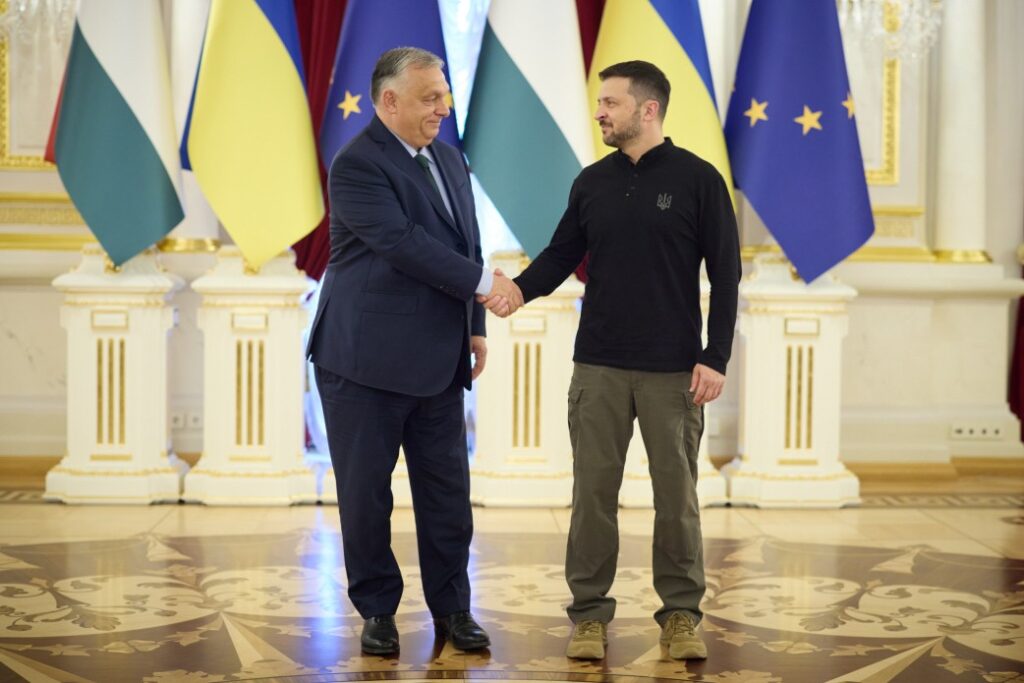
There has been continued obstruction to Moldovan EU membership by countries such as Hungary, where Prime Minister Viktor Orbán has made blocking further EU enlargement a key part of his bid for reelection.
And whilst Orbán is trailing in the polls ahead of Hungary’s April 12 election, opposition party Tisza have themselves appeared reticent on the issue of further EU enlargement – although the country has been opposed in principle only to Ukraine joining the EU.
Both Moldovan and Ukrainian applications have, however, been effectively coupled together as part of the EU’s policy of handling separate applications for countries from the same region.Consequently, a veto on one has had the effect of blocking the other.
Brussels has been looking at attempts at resolving this, including qualified voting for existing members – which would remove the Hungarian veto – or barring candidate countries from having full voting rights. However, some EU member states have also raised concerns that additional members could potentially cause even greater instability.
Meanwhile, important questions also remain around reforms to Moldova’s justice system and the status of the Transnistria region.
Nevertheless, President Sandu has set the goal of 2030 as the target for Moldova joining the EU, which has been described as ambitious, regardless of still keeping the country behind other contenders such as Montenegro – which is expected to conclude negotiations by late 2026 – and Iceland – which has fast-tracked its process.
Heightened security concerns following the war in Ukraine are likely to increase bids for EU membership. Last month also saw Norwegian opposition leader Ine Eriksen Søreide discuss joining, whilst London mayor Sadiq Khan also talked about the question of the UK rejoining the Union, ten years on from Brexit.
“Our commitment was and remains to prepare the country for accession by [2030],” stated Sandu. “We hope that things will go smoothly on the European Union side. Because now we have this blockage, but that does not mean that it has stopped us from our path or that we have been delayed by a day.”
“Even if we do not have, formally, the decision, we are working because we know what the targets are that we have to work towards. But we certainly want a solution to be found,” the head of state further explained.
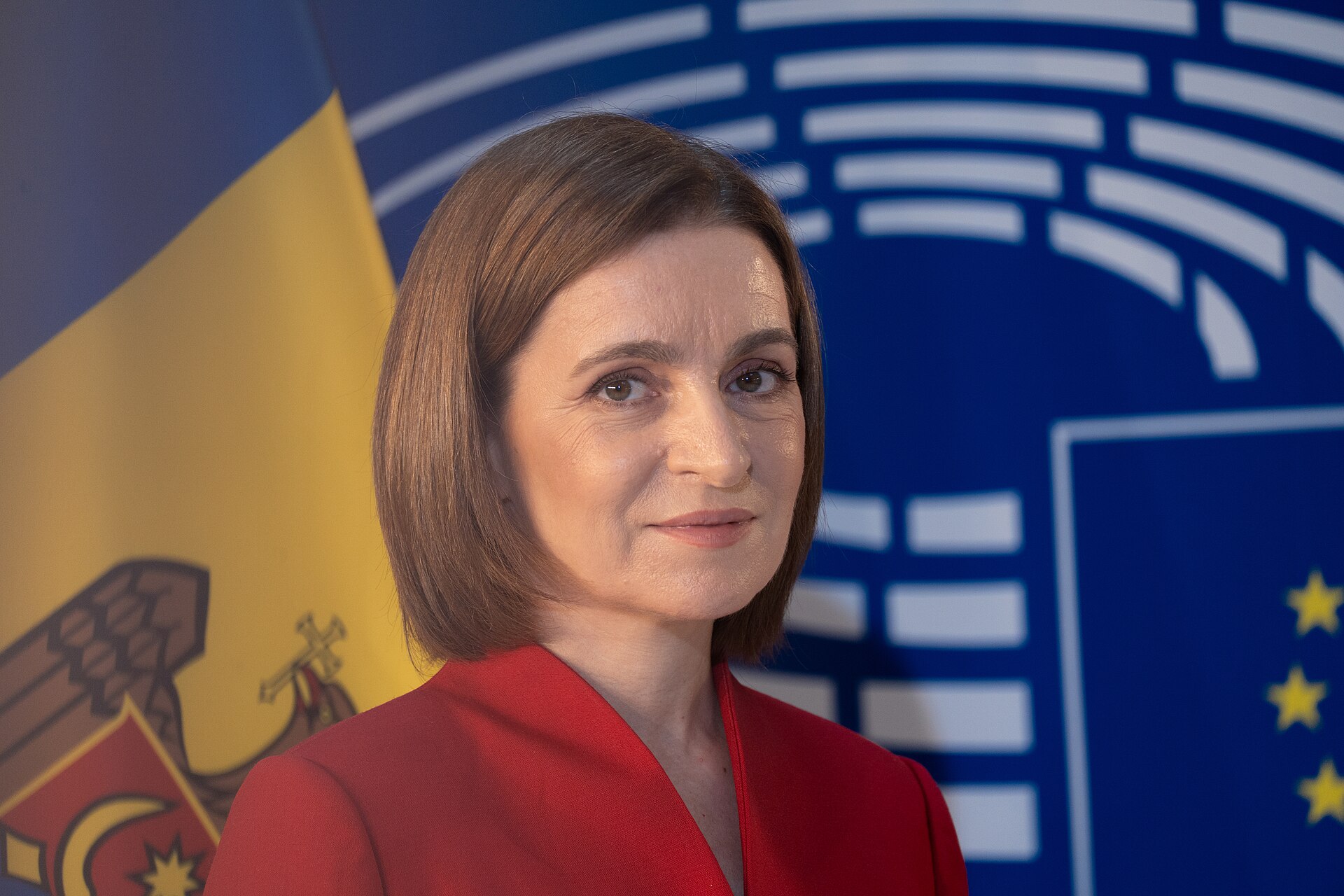
Featured image: President Maia Sandu says Russia wants to turn Moldova against Europe
Source: Wikimedia Commons
Author: European Parliament
Creative Common Licenses