

Campaigns for the April 12 elections in Hungary have been heating up, with accusations from both sides of disinformation and allegations of foreign interference.
The contest has drawn increasing international scrutiny, especially with current Prime Minister Viktor Orbán – who is seen as one of Russian President Vladimir Putin’s strongest allies in Europe – continuing to block a loan by the EU to Ukraine of €90 billion.
Read more: Hungary blocks €90 billion in aid to Ukraine: European Parliament pushes back
U.S. Vice President JD Vance is set to make a visit to the country next week in a show of support for Orbán, after President Donald Trump stated that the Hungarian leader had his “complete and total endorsement.”
“Viktor Orbán is a truly strong and powerful leader, with a proven track record of delivering phenomenal results […] I look forward to continuing working closely with him so that both of our countries can further advance this tremendous path to success and cooperation,” Trump shared on his social media website Truth Social.
“Hungary: get out and vote for Viktor Orbán. He is a true friend, fighter, and winner,” the U.S. head of state continued.
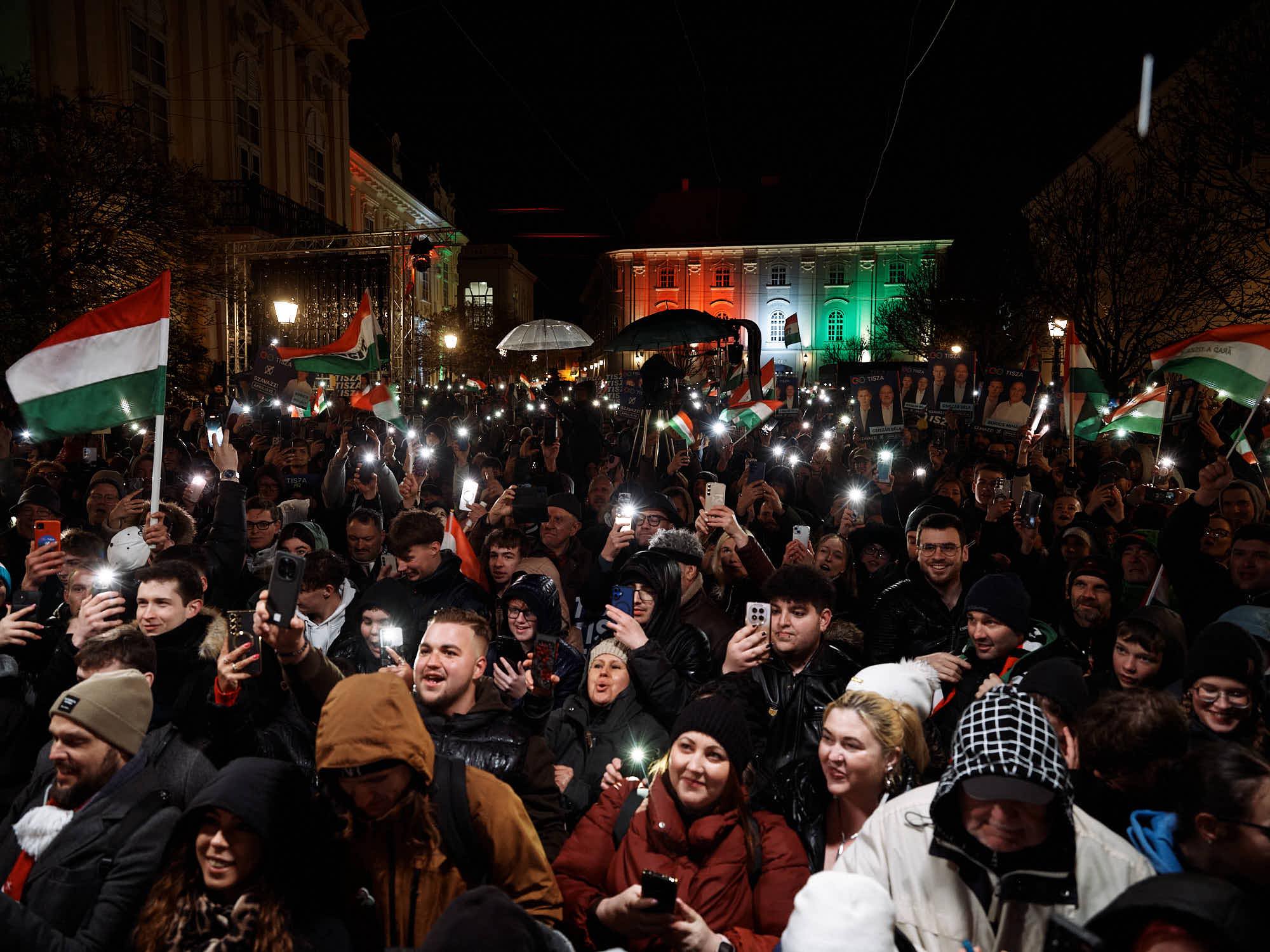
Opposition party Tisza has continued to lead in the polls, having consistently done so since campaigns began. According to a survey by the 21 Research Institute, Tisza is supported by 56% of decided voters, against governing party Fidesz’s 37% – 900,000 more supporters for Tisza nationwide
Previous polls have shown a similar picture, with the government trailing behind the opposition forces by 10 points since February.
Despite this, the Fidesz government maintains significant control over much of the media, and has drawn accusations of widespread gerrymandering and voter manipulation. The emergence of rival teams of vote observers – including ones set up by the government which have drawn accusations of links to Putin – has further raised concerns over whether the final vote may be contested, as well as over the extent of possible foreign interference.
Interference by the Kremlin?
While The Washington Post reported that Hungarian Foreign Minister Péter Szijjártó has been leaking confidential information from the EU Council meetings to Russia, an unnamed European intelligence agency found Russia was secretly planning a staged assassination attempt on Orbán.
Such plans were designed to be a gamechanger that would turn around Orbán’s popularity and “shift the perception of the campaign out of the rational realm of socioeconomic questions into an emotional one.”
Upon the revelations, opposition leader Péter Magyar accused the government of betraying both Hungary’s and Europe’s interests, stating that the allegations, if true, “would amount to treason, which carries a potential life sentence. A future Tisza government will immediately investigate the matter.”
The story, however, does not appear to have been substantiated outside of the newspaper’s report, with Kremlin spokesman Dmitry Peskov dismissing the claim as “disinformation.”
Critics within Hungary and allies of the Orbán regime have likewise dubbed the story “fake news” and an example of active disinformation from those on the left – as well as hostile governments such as Poland under Prime Minister Donald Tusk.
Pro-Orbán newspaper The Hungarian Conservative also reported that the accusation lacks any verifiable evidence, describing it as part of a wider narrative around Russian interference which can then be used to claim the election has been stolen.
They also maintained that allegations around Hungary’s Foreign Minister are part of this same narrative, though in the days since, Szijjártó admitted on March 31 that he had spoken to Moscow about measures the EU was considering against Russia.
Hungary has maintained that this was done in line with common diplomatic practices, and that no confidential information was leaked.
Online misinformation
Opposition groups have maintained that Russia is responsible for spreading rumours of an attempted assassination or coup against Orbán in order to bolster support for him.
Videos on X alleged that Hungarians were being urged “to take up arms, resist the authorities and kill Viktor Orbán,” while calling for the “liberation of Hungary through bloodshed.”
Online Russian networks, such as Matrjoska, have been circulating “camouflage videos” showing faked attempts at fermenting insurrection – supposedly backed by Ukraine – in the hopes of further inflaming Hungarian-Ukrainian tensions.
Hungary’s relationship with Ukraine is set to be among the key issues determining the outcome of the election, with the Orbán government having portrayed Magyar as someone who will drag Hungary into Ukraine’s war against Russia and allow its entry into the EU.
EU leaders have been hopeful that a victory in the election for Tisza will help to reset the current dynamic within the EU and boost support for Ukraine, with European officials indicating that the delayed €90 billion loan can be transferred within days of a Magyar victory.
Others within the anti-Ukraine bloc, however, have stated they will continue to vote against this, whilst Magyar himself is by no means certain to bring about a change in policy on the matter from Budapest.
Likely aware of this being one of Orbán’s key attack lines, Magyar, a former member of Fidesz, has also opposed potential steps towards EU membership for Ukraine, as well as bids to send arms to Ukraine. Tisza also voted against the billion-euro loan, with Magyar stating: “no one wants a pro-Ukrainian government.”
Regardless, disinformation on the subject has persisted online, with the European Digital Media Observatory (EDMO) describing the campaign as “dystopian.”
In the context of the elections, AI-generated videos have emerged on social media, including one in which EU Commission President Ursula von der Leyen calls Magyar to ask for money, and another featuring a distorted speech from Tisza politician Kapitány Istvá.
Meanwhile, “media-spoofing” – by which fake content is falsely attributed to official news and media networks – has become increasingly recurrent, and thousands of bots have been reportedly promoting Fidesz politicians online.
“Disinformation doesn’t work with a few big major incidents before a specific election,” the EDMO found. “[It] normally impacts public opinions and voters through an endless hammering of the same narratives, conveyed through a systematic dissemination of false content that is not – taken individually – particularly relevant or exceptional.”
The organisation has also stressed the impact such tactics can have outside of political campaigns:
“Spiking disinformation in Hungary is not only eroding the integrity of the electoral, nation-wide discourse. Its corrosive effects are being felt also in other European countries.”
Featured image: Péter Magyar via Facebook