
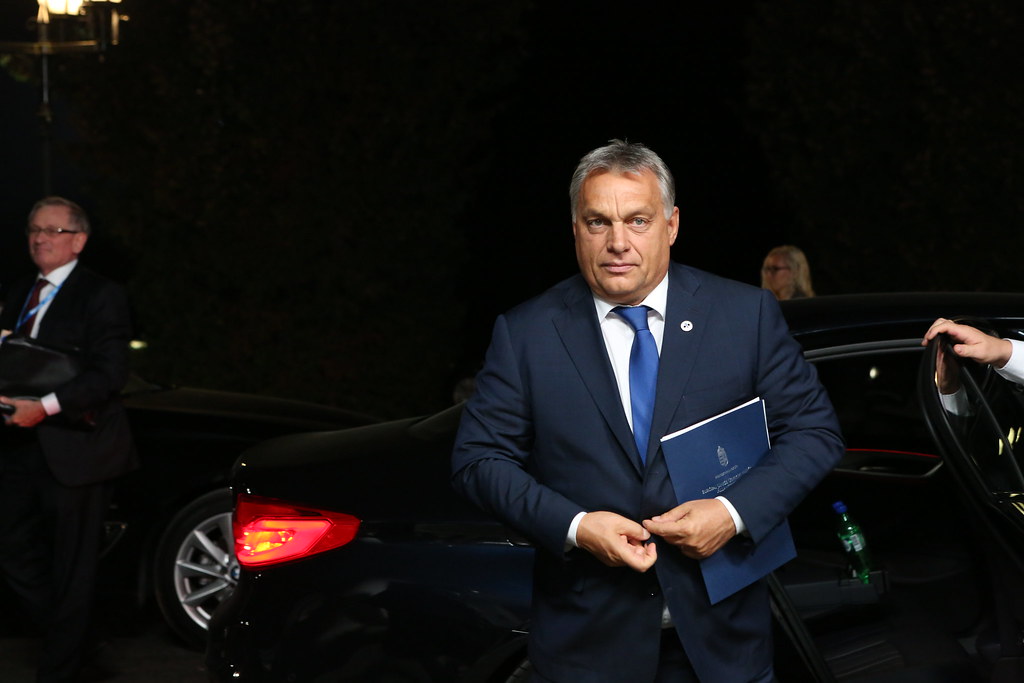
London, UK – With the Hungarian election set for April 12, Prime Minister Viktor Orbán finds himself balancing delicately on the edge of defeat.
A high turnout is expected – greater than the 69.59% recorded in the 2022 parliamentary elections – driven by the rapid ascendency of the Tisza Party, now led by dissident Péter Magyar, who spoke out against what he saw as corruption and scandal in Orbán’s Fidesz party.
This intervention set the stage for an intense political contest between the two, and it has proved to be exactly that. Tisza is now polling ahead of Fidesz, threatening the 16-year reign of Orbán atop his seemingly indestructible throne.
However, even with a potential loss for the Fidesz Party, Orbán’s long-term hold on power is symptomatic of a wider phenomenon spreading across Europe – which the EU is struggling to contain. Hungary under Orbán has become the most prominent example of a state explicitly restricting freedom while disregarding Union guidelines.
Over the past decade, Orbán has systematically reshaped Hungary’s political landscape in ways that critics argue undermine democratic norms. Media ownership has become increasingly concentrated among pro-government figures, limiting the scope for independent journalism; judicial reforms have expanded political influence over the courts, raising concerns about the erosion of institutional checks and balances; and changes to electoral laws and constituency boundaries have further tilted the political playing field in favour of the ruling Fidesz party, making meaningful competition more difficult.
The consequences extend beyond democratic institutions. Wealth has steadily accumulated among pro-Fidesz elites, with public assets frequently channelled into private hands through corrupt practices, particularly in key sectors such as banking, energy, and tourism.
Hungary is not an isolated case. The 2026 Liberties Rule of Law Report identified several countries actively dismantling rule of law, including Slovakia, Italy, Bulgaria, and Croatia.
Slovakia in particular has experienced its own form of democratic backsliding since the return of Prime Minister Robert Fico to power in 2023. Fico’s government began its campaign with the clear intention of exerting greater control over the media: independent broadcasters were labelled ‘hostile’, and in 2024 the government passed a law that dissolved Slovakia’s public broadcaster and replaced it with a new entity, Slovak Television and Radio – governed by a council appointed by the state.
Continuing to follow Orbán’s example, Fico interfered in the judicial system, passing a law shutting down the Special Prosecutor’s Office, which specialised in investigating and dealing with serious corruption.
Whilst the EU has mechanisms in place to mitigate democratic backsliding, they are often unenforced or ineffective. Article 7 of the Treaty on European Union allows for the suspension of a member state’s voting rights if it is found to be persistently breaching the bloc’s core values, including democracy and the rule of law.
Although proceedings have been initiated against Hungary, enforcement has stalled due to the requirement for unanimity among member states, with political allies providing protection.
Moreover, 93% of all 2025 European Commission recommendations were repeated from previous years, showing near-zero compliance. Even with concrete measures put in place – such as the withholding of EU funds – the descent of nations like Hungary and Slovakia into a form of democracy Orbán branded ‘illiberal’ has continued.
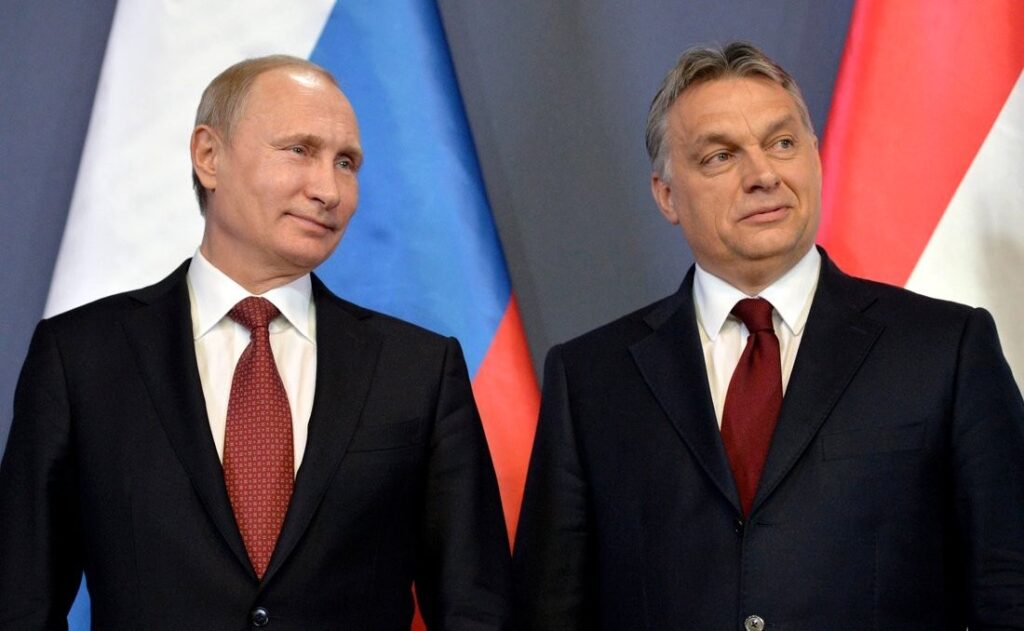
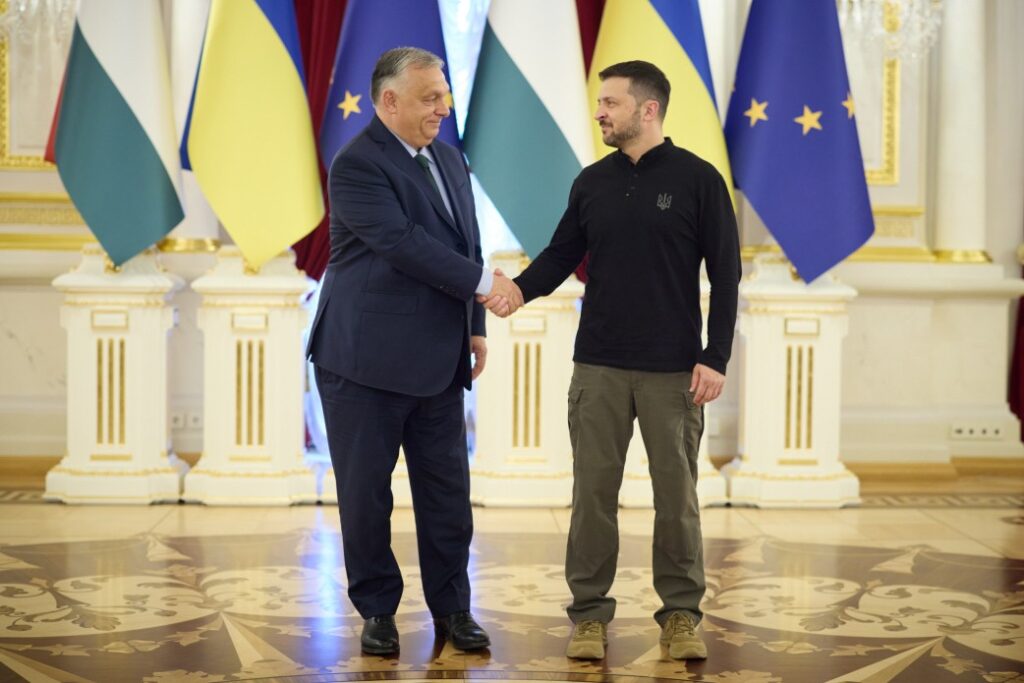
The rise of illiberalism is increasingly intertwined with the strengthening of geopolitical allegiances in Eastern Europe. Both Orbán and Fico have expressed their support for Vladimir Putin, with Orbán telling the Russian leader, ‘I am at your service’, and Fico halting military support to Ukraine.
The growing influence of the Kremlin on European politics is becoming more difficult for the EU to ignore, deepening internal divisions and weakening its ability to respond cohesively to external threats.
Magyar has the opportunity to reintroduce faith in democracy to the Hungarian people, but the impact it will have on the rest of Europe may alone be insufficient.
Russia is likely to deepen its influence in parts of Eastern Europe, leading to relationships becoming further strained within the Union; the EU will need to move beyond rhetoric and adopt more decisive measures against member states that openly defy its core principles.
So far, its responses to leaders such as Orbán and Fico have failed to produce meaningful change. Without structural reform and the political will to enforce its own rules, the spread of illiberal democracy is unlikely to be contained.
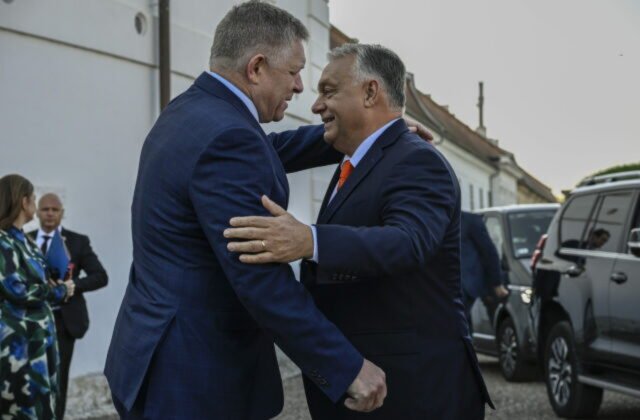
Featured image: V4 was deliberately destroyed because it was too strong, claims Fico. It will become a little stronger with the arrival of Babiš
Source: Veci Verejne
Creative Commons Licenses