
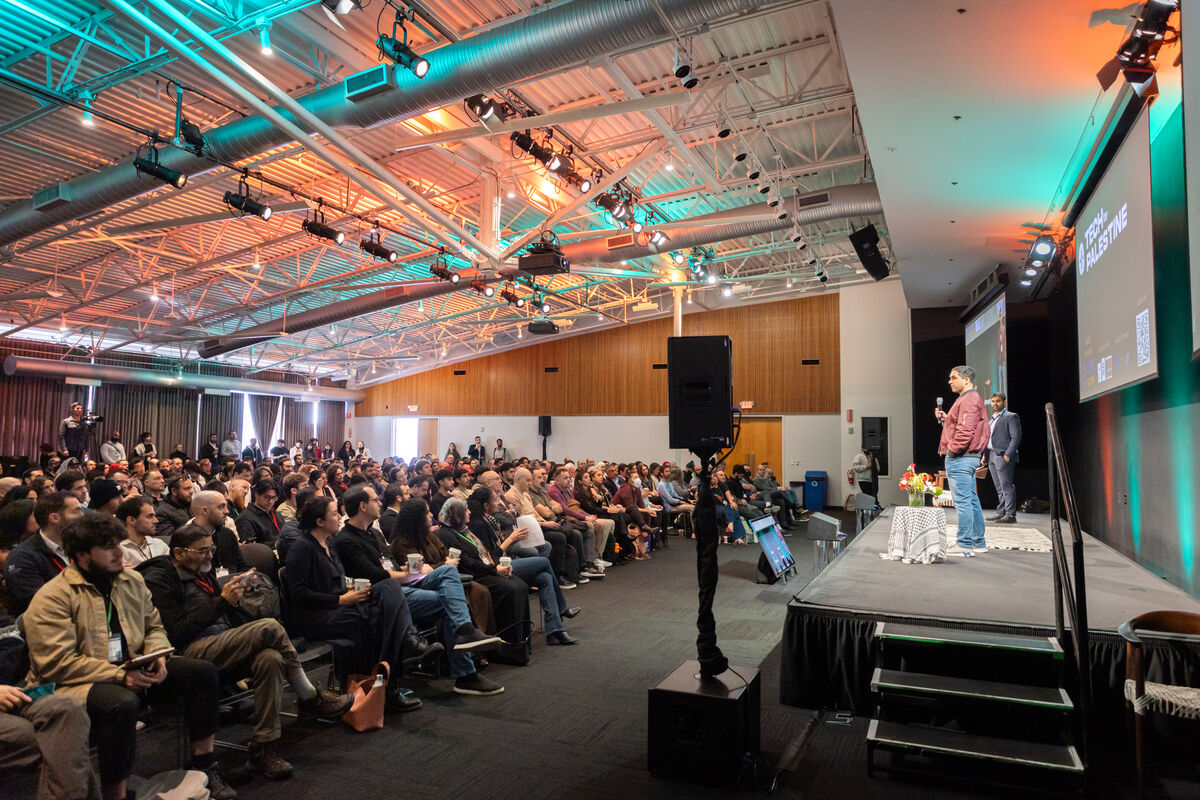

Barcelona, Spain — Hundreds of technology professionals will gather in Barcelona on April 11 for the international Tech for Palestine conference, an organisation working to build a tech ecosystem that is not dependent on companies considered complicit in the genocide in Gaza.
The choice of city is no accident – in recent years, Barcelona has become one of the most visible nodes of the international solidarity movement with Palestine.
The following day, April 12, the Global Sumud Flotilla – a fleet of boats carrying humanitarian aid destined for the people of Gaza – will once again set sail from Barcelona’s port. Last year, on its first attempt, the flotilla was intercepted by Israel in the Mediterranean before reaching its destination. Among those detained in that operation were activist and former Barcelona mayor Ada Colau and Swedish activist Greta Thunberg.
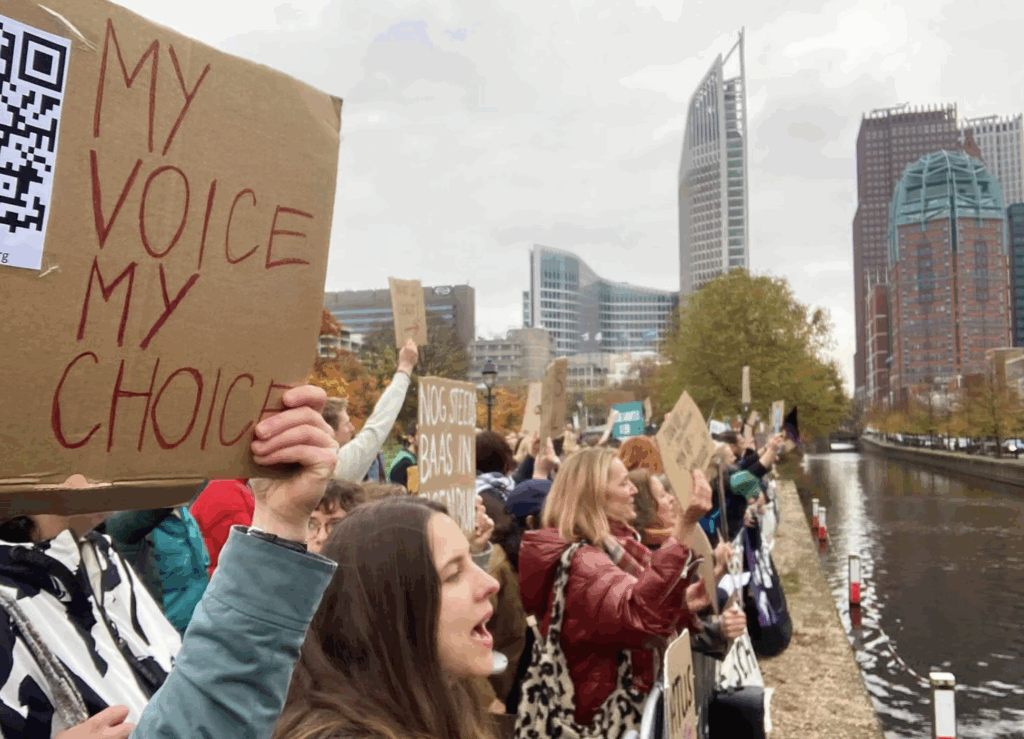
That both events coincide on the same weekend, in the same city, paints a picture of what Barcelona is coming to represent in this global conflict. In addition to being a backdrop for mass demonstrations – which have at times drawn more than 70,000 participants – the city has made its stance clear, both politically, and now through the world of technology too.
A city that has taken a position
At the political level, Spain has become one of the most critical Western governments towards Israel’s military conduct. Prime Minister Pedro Sánchez was among the first European heads of government to formally recognise the Palestinian state, in May 2024, and in September 2025 announced a package of measures aimed at “stopping genocide in Gaza, prosecuting its promoters, and showing support to Palestinians”, including an arms embargo on Israel.
In response, Israeli Prime Minister Benjamin Netanyahu accused Sánchez of issuing a “genocidal threat” against Israel, and Israeli Communications Minister Shlomo Karhi ordered the cancellation of Israel’s participation in Mobile World Congress (MWC) in Barcelona – one of the world’s most important technology events, held annually in the city.
Barcelona City Council, however, had already approved a decree in May 2025 prohibiting Israeli arms companies and Israeli exhibition areas from participating in the Fira de Barcelona, where MWC takes place.
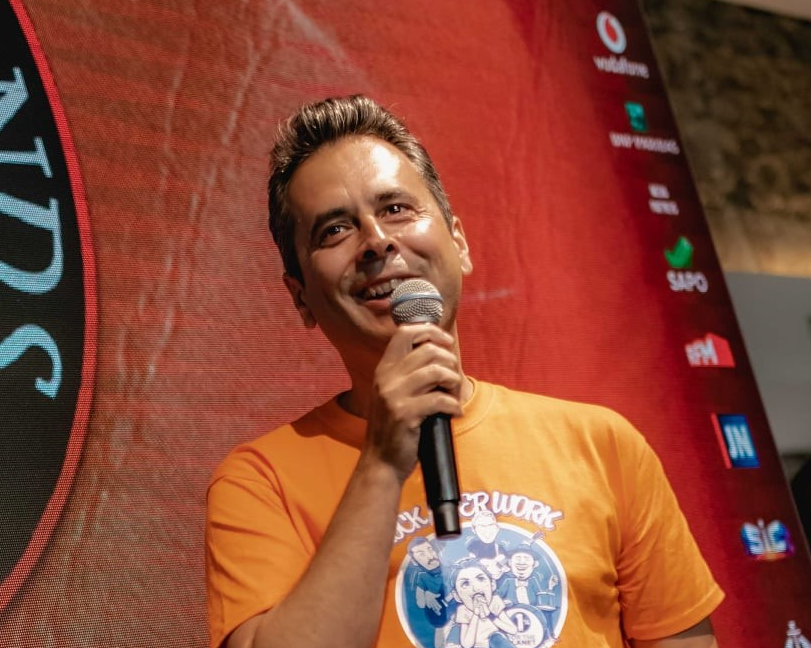
Paul Biggar, co-founder of Tech for Palestine, explained that the decision to bring the conference to Barcelona was straightforward. “Spain is the most pro-Palestine country in Europe – it’s well ahead of everywhere else,” he told EU Reports. “When you’re in Barcelona, there are Palestinian flags everywhere. There’s a large Palestinian community that has settled here. The same energy that drew them to the city drew us here too.”
Omar Hamayel, a 37-year-old financial consultant from Ramallah relocated to Barcelona with his family around a year ago. “When I tell people I’m Palestinian, they ask to hug me and say they’re so sorry for what I’ve been through. In the year or so that we’ve been here, my family and I haven’t experienced anything close to racism.” However, he says that friends who moved to other European cities have had very different experiences.
Hamayel decided to leave Palestine after Israeli settlers raided his village in the West Bank and set fire to a number of buildings. His family’s home was spared, but the experience left him unable to sleep and with chronic stress-related health problems – and with a young child and a second one on the way, he and his wife decided to leave permanently. “We chose Barcelona because we wanted to live next to the sea,” he says. “In Palestine, we needed permission from the Israelis just to travel to the coast.”
A second Palestinian resident of Barcelona, who asked not to be named, shared that in his experience, Spain is much more “politically friendly”. He added: “You take part in demonstrations and be part of Palestinian cultural and solidarity events without having to carefully police what you say. In places like Germany or the U.S., people think much harder about the price they might pay for their activism. Here, people don’t feel they need to censor themselves.”
Technology is not neutral
All of this comes at a time when the international community is beginning to stand up to the tech sector’s complicity in Israel’s human rights violations. In July 2025, a United Nations report identified 48 companies as actors facilitating what the document called a “joint criminal enterprise” in Gaza, with Microsoft, Amazon and Google prominently named.
However, some of the most impactful responses have been grassroots in nature. Biggar published a blog post in December 2023 calling on colleagues in the tech sector to break their silence around the Gaza genocide, and it quickly went viral and snowballed into a large tech community initiative, which eventually led to the launch of Tech for Palestine.
“Around 70% of people working in the tech industry don’t feel that they should speak up. What we’re doing is trying to make it easier for that 70% to find their voice. And for that, you need an alternative funding ecosystem. The Silicon Valley funding ecosystem is incredibly Zionist,” he explained.
Biggar describes Tech for Palestine as an incubator for advocacy projects – not exclusively tech-based, but using the tools and scale of the tech world to grow them. The organisation provides micro-grants, volunteers and strategic advice to initiatives at various stages of development.
Among the projects it has supported are Boycat, an app that helps consumers identify ethical alternatives to Israeli products, with over $500 million in Israeli goods boycotted to date; and UpScrolled, a platform that fights shadow-banning of pro-Palestinian content, which grew to over five million users with Tech for Palestine’s support.
“Our goal has always been to grow the movement,” Biggar explained. “There are tens of thousands of Zionist initiatives deliberately working to suppress Palestinian voices. We are trying to counter that. Ultimately, we want to create tens of thousands of projects on our side.”
The Barcelona conference
The Tech for Palestine Barcelona Conference will bring together entrepreneurs, engineers, activists and development organisations from around the world. While the event has a strong tech focus, Biggar is clear that it is not aimed exclusively at Palestinians or the tech community:
“The majority of attendees are people who have seen what is happening and want to help, but don’t necessarily know where to begin. The hope is that people leave knowing what options exist; that there are a range of different projects and a range of different roles within them, so hopefully people leave feeling like they are actually concrete ways they can help.”
Among the speakers is Alan El-Kadhi, CEO of Gaza Sky Geeks, an organisation that since 2011 has worked to train young Palestinians in digital skills that allow them to earn an income working online for clients abroad.
Gaza Sky Geeks is part of Mercy Corps, an international NGO with decades of presence in Palestine. Before October 7, 2023, the organisation trained close to 4,500 people a year in skills including coding, cybersecurity, graphic design, artificial intelligence and digital marketing.
Despite being forced to pause all activities in Gaza due to the destruction of its three large training facilities upon the outbreak of the conflict, Gaza Sky Geeks has continued to deliver its programmes without a break by shifting all activities online and operating from Ramallah in the West Bank, as well as retaining a small team on the ground in Gaza.
Just last year, over 5,000 participants – 30% from Gaza and over 50% women – and 35 tech firms completed its assistance programmes, with over 2,000 graduating a specialist tech training to work online.
El-Kadhi argues that online work is the fastest possible route to economic recovery for Gaza:
“The online sector is the one that will bring the fastest benefit to a lot of people. Unlike agriculture or manufacturing, which will take many years and huge investment to rebuild, tech workers trained in specialist tech skills can immediately learn and earn online with just a laptop and internet access. Everyone who works online is freed from dependence on aid, and brings income from abroad into the economy to stimulate the revival of local businesses and jobs,” he noted.
The Barcelona conference is the third of its kind; Tech for Palestine has already held similar events in London and San Francisco, attracting hundreds of attendees in each city.
An alternative tech ecosystem
Beyond immediate support for Palestinian workers and companies, the Barcelona conference aims to advance the construction of a technological ecosystem not conditioned by Silicon Valley capital flows or the influence of companies with contracts with the Israeli military.
The idea is not disconnected from wider debates within the sector itself. In recent years – particularly following Donald Trump’s return to the U.S. presidency and his visible influence over the country’s leading tech CEOs – a growing chorus of voices have warned that technology has never been, and cannot be, neutral: every platform, AI system and investment decision reflects concrete political choices about whose voices are amplified and who is silenced.
Tech for Palestine proposes that an alternative is possible. Barcelona, as a growing European tech hub and with the weight of its public positioning on the Gaza genocide, is a natural candidate to become that space.
The same weekend that a group of activists makes an attempt to bring aid to Gaza by sea, another group will arrive in the city to try to build another way of breaking the blockade.
Featured image: Courtesy of Tech for Palestine