

Rome, Italy – Italian voters rejected proposed changes to the country’s judiciary in a vote that has been widely regarded as a referendum on right-wing Italian Prime Minister Giorgia Meloni’s time in office.
Had they been approved, the constitutional reforms would have split the country’s unified judiciary into separate career paths for judges and prosecutors. This would have meant transforming the Superior Council of the Magistracy into two distinct councils – one for judges and one for prosecutors.
The reforms would have been the first amendments to the Italian post-fascist constitution made by a hard-right government.
Turnout in the referendum was almost 60%, with the “No” vote receiving 54% and the “Yes” camp 46%. Meloni, who had consistently supported the reforms, conceded defeat on Monday, with voting taking place over two days.
Read more: Meloni accused of manipulating Italy’s judicial system ahead of referendum
The referendum defeat has caused turmoil in Meloni’s administration. Since the results were declared, two senior scandal-plagued figures at the justice ministry – Undersecretary Andrea Delmastro and Chief of Staff Giusi Bartolozzi – have resigned. Meloni also called for Tourism Minister Daniela Santanchè to do the same.
Santanchè was embroiled in a scandal last year over charges of false accounting related to a publishing group she used to own.
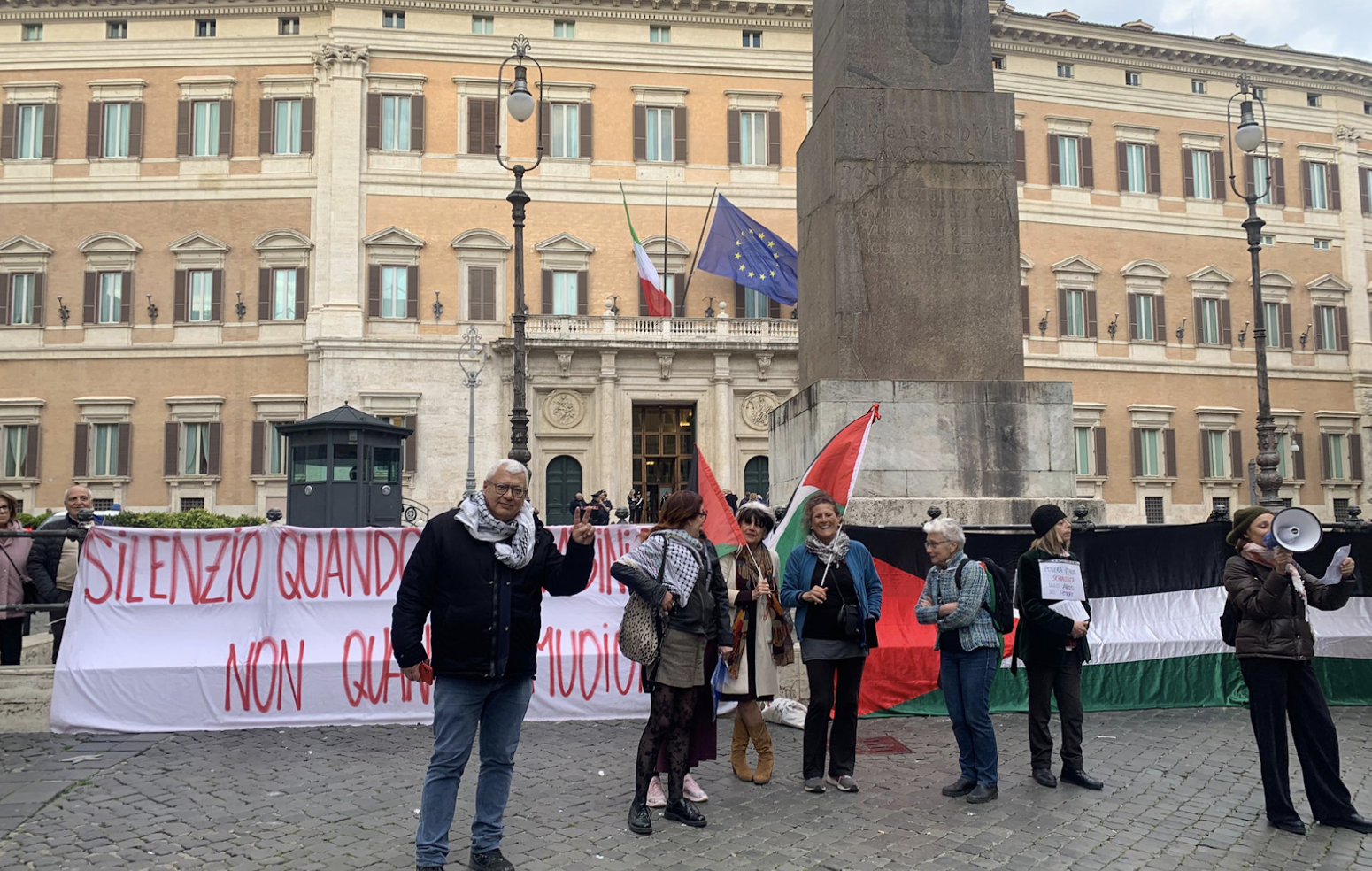
Protestors gathered outside of Palazzo Montecitorio in Rome – the seat of the Italian Chamber of Deputies – on Monday and Tuesday, celebrating at Meloni’s expense and demanding her resignation.
Speaking to EU Reports just hours before Delmastro’s resignation, one protestor, who chose to be identified only as Raffaelle, said that “many in Meloni’s party are convicted felons or in the process of being tried … like Delmastro, the Justice Undersecretary, who held a stake in a company connected to the mafia”.

Image credit: Raphael McMahon
This mafia-related scandal was alluded to by Delmastro as the reason for his resignation. The Delmastro case, along with other administrative changes, suggest Meloni is seeking to polish her government’s political image and dampen calls for her own resignation, which have increased since Monday’s vote.
Raffaelle added that he “voted ‘No’ with great conviction, because … this was a political referendum which sought to modify the constitution and […] change the executive, legislative and judicial powers of the state in such a way that would allow politicians to weaken judicial powers”.
Raffaelle’s concerns have been echoed by Italy’s center-left opposition, which framed Meloni’s proposals as a threat to judicial independence and the separation of powers – key to a democracy.
Meloni had argued that powerful left-wing factions in the judiciary have a history of blocking significant policies of hers, especially on migration. A “No” vote, she said before the referendum, would see “even more … immigrants, rapists, paedophiles, drug dealers being freed … putting your security at risk”.
Meloni also argued that her opponents could not fault the reform, so instead styled the vote as a chance for Italians to attack her political record.
However, Ilaria de Bonis, a Rome-based journalist who was also in attendance at the protest outside Montecitorio, told EU Reports that while she voted “No” on a constitutional basis, she also acknowledged the political element of her decision.
“The cornerstones of the [post-fascist] constitution should not be touched … but this was also a very important political vote … for me and for all the people who voted ‘No’, this vote represents our disenchantment with the way things are going in Italy,” de Bonis said.
Others in the southern European nation have expressed frustration at the politicization of the vote. Also in conversation with EU Reports, an Italian university student, Giovanni, said:
“Those who voted ‘No’ did not fully understand what the referendum was proposing; they only thought about the fact that Meloni was supporting it”.
If the “Yes” camp had won, “something would have changed and we would have been like other European countries [who separate prosecutors’ and judges’ careers]”, the young Italian concluded, though he refused to say how he had voted.
EU countries including Spain, Portugal and France all prevent judges and prosecutors from switching careers interchangeably.
Although some opposition parties, including the Democratic Party, Five Star Movement and Green and Left supported a “No” vote, others – such as the Liberal Democratic Party and Action Party – saw a “Yes” vote as a means to ending factional control over the Italian judiciary, which has long been criticized because of its perceived factionalism.
Featured image: The European delegation of the Nuestra América Convoy to Cuba at Malpensa airport in Milan.
Courtesy of Raphael McMahon (own picture)