

While Hungary continues to block €90 billion worth of EU aid to Ukraine after two weeks of legal deadlock, the European Parliament has adopted a resolution to override the Hungarian veto on Ukraine’s EU membership bid – passing with 385 votes in favour and 147 against.
The aid package had been scheduled for release at the end of February, marking the fourth anniversary of the outbreak of the war between Russia and Ukraine.
Talks between the warring nations, brokered by the U.S.’s Trump administration, have been ongoing – though Russian President Vladimir Putin renewed attacks on Ukraine’s energy infrastructure in the meantime.
The EU had sought to project a united front in support of Ukraine, particularly amid uncertainty over the U.S. position, with American-led diplomacy now apparently on hold following Washington’s intervention in Iran.
That show of solidarity has been undermined by an anti-Ukraine bloc within the EU, led by Hungary under Prime Minister Viktor Orbán. The Orbán regime has consistently drawn criticism from the EU for its close links with Putin, its opposition to further support for Ukraine, and its resistance to Ukrainian EU membership.
Hungary has previously blocked attempts to send aid to Ukraine and impose sanctions on Russia – moves that have prompted calls within the EU to suspend Hungary’s voting rights and freeze EU funds directed to the country.
The politics of Hungary’s veto
The loan to Ukraine had been approved by Brussels in December 2025, with the aim of easing pressure on the country in the face of Russian aggression. It comprised €60 billion earmarked for strengthening Ukrainian defence and €30 billion in financial assistance.
It had been understood that the anti-Ukraine bloc of Czechia, Hungary, and Slovakia would abstain rather than vote against the measure, having secured an opt-out from backing the loan. Hungary, however, used its veto to block approval outright, while simultaneously blocking further sanctions against Russia.
Hungarian officials cited an ongoing dispute over the Druzhba pipeline – for which they blame Ukraine – as justification for the decision.
Read more: Hungary, Slovakia halt diesel supplies to Ukraine after oil flows from the country suspended
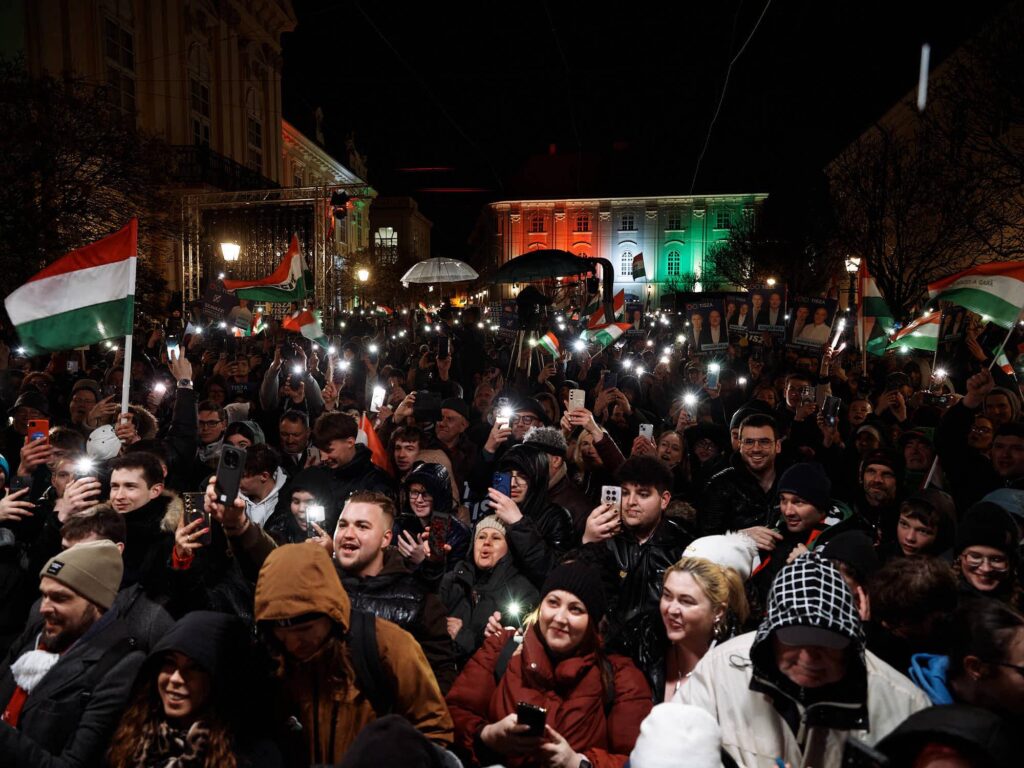
The veto comes as Hungary enters election season, with Orbán seeking a fifth consecutive term. His government, which has drawn widespread criticism over allegations of corruption, illiberalism and the erosion of democratic norms, is heading into a campaign under increasing pressure.
With the incumbent Fidesz party consistently polling behind the opposition, Orbán has sought to weaponize the issue of Ukraine to shore up domestic popularity, pledging to continue blocking EU assistance from the war effort.
Read more: The end for Orbán?: Europe looks ahead to Hungary’s elections
Campaign posters across Hungary carry the slogan “Our message to Brussels: We won’t pay!”, as petitions warning that EU support for Ukraine will financially devastate Hungary have been mailed to every voter.
Meanwhile, Orbán’s chief rival, Peter Magyar, has been portrayed as a stooge of Ukraine’s Volodymyr Zelenskyy and of Brussels. Analysts have noted that the backing Orbán has has received from the international far right – including from President Trump – has emboldened him to defy his regional counterparts on the matter of Ukraine.
European leaders seek ways around the blockade
Members of the European Parliament were incensed by Hungary’s veto, describing it as a ‘betrayal’ and as a serious undermining of European efforts at solidarity in support.
Lithuanian Foreign Minister Kęstutis Budrys was amongst those suggesting that the EU could “invoke Article 7 and stop this problem.” Meanwhile, Polish Prime Minister Donald Tusk accused Hungary of sabotaging its fellow EU members.
“I’m convinced that the other EU leaders will do everything to make the methods used by the Hungarian Prime Minister ineffective,” said Tusk.
Similarly, Spanish Foreign Minister José Manuel Albares joined calls to remove member states’ veto capacities, arguing that, when it comes to foreign policy, the EU should move from complete unanimity to qualified majorities in voting processes.
European Commission President Ursula von der Leyen was left to travel to Kyiv in late February to mark the war’s fourth anniversary with little more than expressions of moral support – a visit critics described as a humiliation for the EU.
Leaders have nonetheless privately reassured President Zelenskyy that Hungary will be circumvented, and von der Leyen was direct in stating the EU’s resolve: “We will deliver on our word one way or the other. We have different options and we will use them.”
In Paris, Commission Vice President Valdis Dombrovskis echoed that confidence, saying he remains committed to getting “this €90 billion Ukraine support loan over the line and engaging both with Ukraine and Hungary to find a way forward.”
In the interim, the International Monetary Fund (IMF) agreed to transfer an $8 billion USD (€6.95 billion) loan to Ukraine, with $1.5 billion disbursed immediately – though this falls well short of the sum Ukraine requires by April to avoid insolvency, a crisis the EU loan was intended to forestall.
Several EU member states have raised the possibility of routing the loan through qualified majority-vote mechanisms, mirroring the approach used to bypass Hungary’s veto on Ukrainian EU membership.
The Commission has also floated the idea of financial incentives for Budapest, alongside a fact-finding mission to the Druzhba pipeline in an attempt to defuse the dispute. Kyiv has pushed back on the latter, and tensions have been further inflamed by remarks from Zelenskyy that were interpreted as a personal threat against Orbán.
Adding to the complexity, Slovakian Prime Minister Robert Fico has signalled that Bratislava will step in to maintain the blockade even if Hungary’s position changes – or if Orbán loses the election.
“The Ukrainian president has recently been talking about resuming supplies in a month, which means after the Hungarian elections, where he is counting on the victory of the opposition,” Fico stated. “The most important message will be that Slovakia is ready to take over the baton from Hungary, if necessary.”
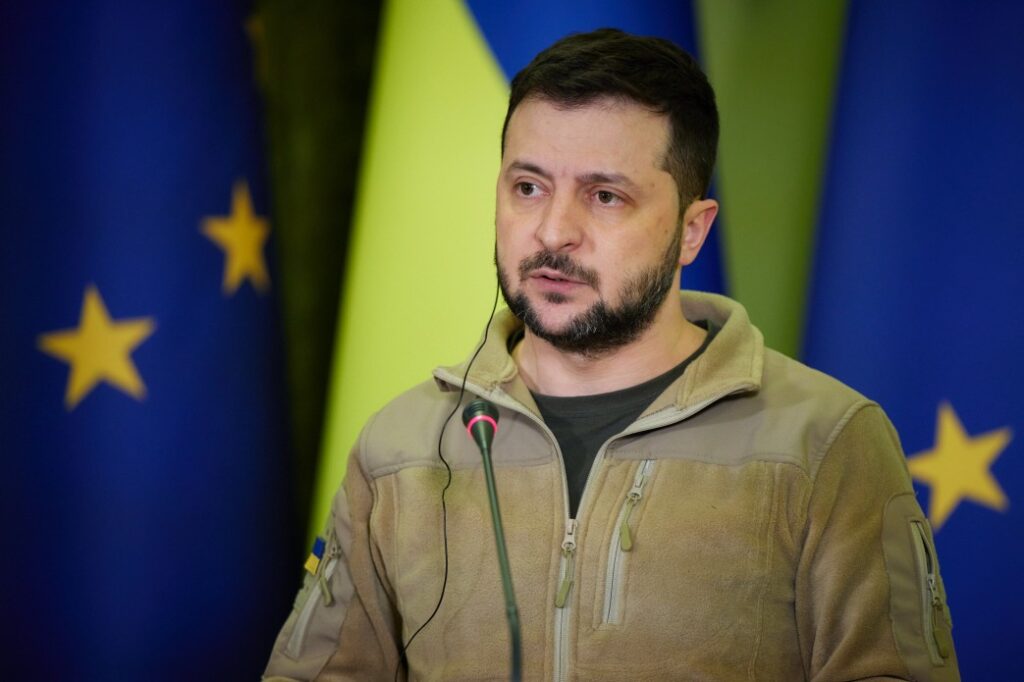
Featured image: Via President of Ukraine.