
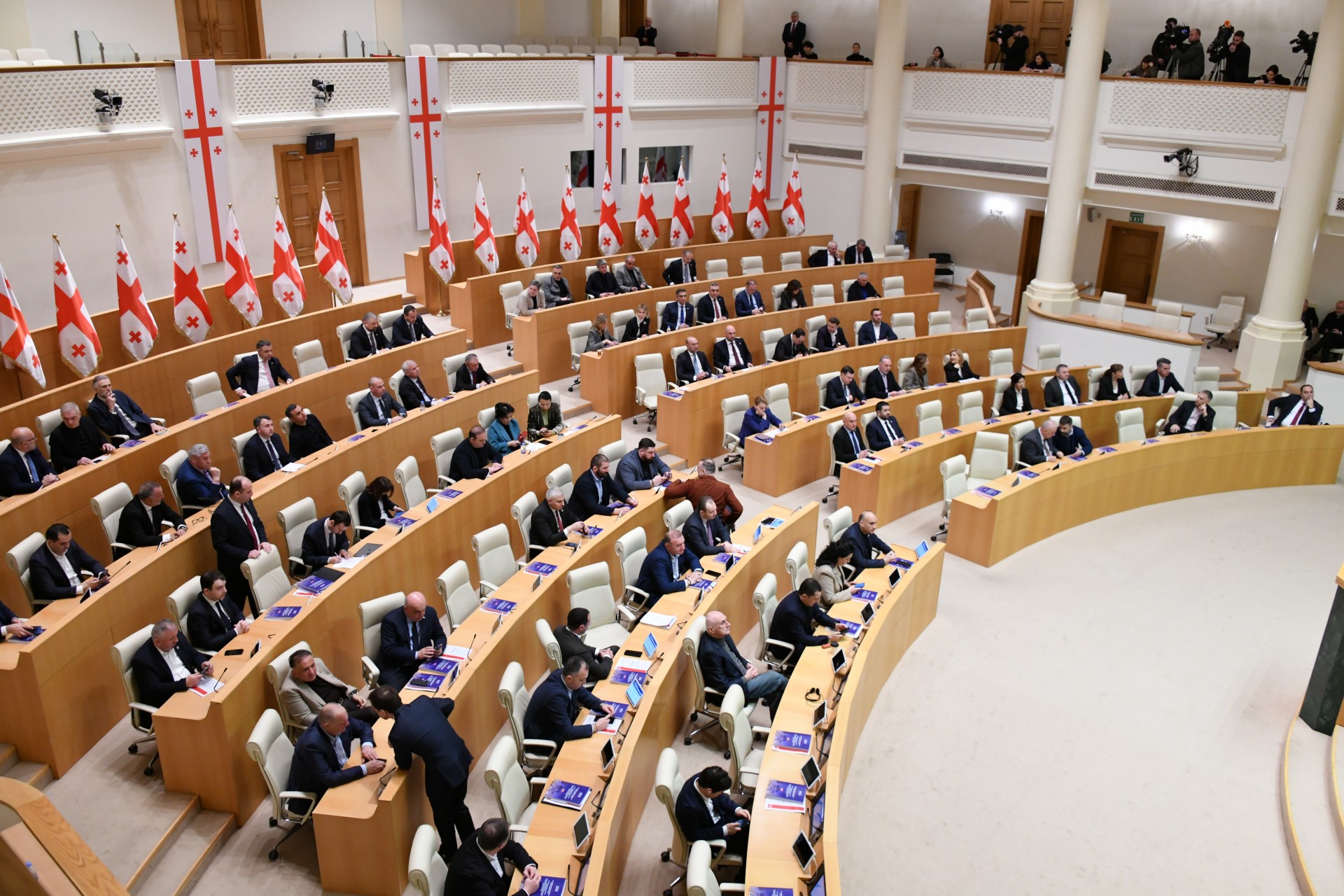
Tbilisi, Georgia – Georgia’s ruling party has adopted a package of legislative amendments that expand state control over foreign-funded organisations and criminalise efforts to undermine constitutional bodies.
The legislation, approved at its final reading on Wednesday, March 4 by Georgian Dream lawmakers, was signed into law by President Mikheil Kavelashvili.
The package introduces a new provision to the criminal code establishing the offence of “extremism against the constitutional order.” The offence carries a maximum penalty of three years in prison and includes “systematic actions” aimed at establishing the perception of illegitimacy of state authorities.
The move comes amid ongoing protests in Georgia that have continued daily since late 2024, following disputed parliamentary elections. Many government opponents refuse to recognise the results of the October vote after international observers reported electoral irregularities.
Read more: 365 days of defiance: Georgia protesters mark resistance movement’s anniversary
Another new amendment requires organisations to obtain government approval before receiving foreign grants. Violations of the law may result in prison sentences of up to six years.
Individuals working for organisations receiving foreign funds will also be banned from membership of political parties for eight years.
The amendment is the second change to the grants law since the start of the current political crisis.
Independent media and non-governmental organisations in Georgia have long been heavily reliant on funding from overseas. As pressure has increased, many NGOs report that they have reduced activities or suspended operations as a result.
European Commission Vice President Kaja Kallas and commissioner Marta Kos released a statement on Friday, March 6, condemning the amendments and describing them as part of a “systematic effort” to restrict democratic space.
They also noted that the grants law’s “vague provisions create profound legal uncertainty and major risks of arbitrary and selective enforcement.”
The statement was released on the same day as the European Union enacted the suspension of visa-free travel for Georgian diplomatic passport holders.
“[Georgian authorities] are regrettably moving Georgia further away from the EU path,” the representatives said, repeating the EU’s recent characterisation of Georgia as a “candidate country in name only.”
Officials from Georgian Dream argue that the measures are necessary to protect the country’s sovereignty from foreign political influence. They have also repeatedly stated that EU membership remains their goal despite calling off integration talks in 2024.
Georgia, once regarded as a democratic frontrunner among post-Soviet states, has faced increasing criticism from the Union over what it describes as democratic backsliding. EU officials have repeatedly expressed concern about legislation that they say restricts civil society and independent media.
Amid these concerns, inspectors from the Organization for Security and Co-operation in Europe recently arrived in Georgia to examine what participating states describe as deteriorating human rights conditions.
Featured image: Via Parliament of Georgia.