

Several major European countries went to the polls last week, producing a complex political picture. Slovenia and Denmark both held general elections, the Italian government lost a major referendum on judicial reform, while France and Germany each held their own local and regional votes.
The results were complex and often contradictory, but analysts are now asking whether, taken together, they point to something bigger shifting beneath the surface of European politics.
Denmark’s dramatic night
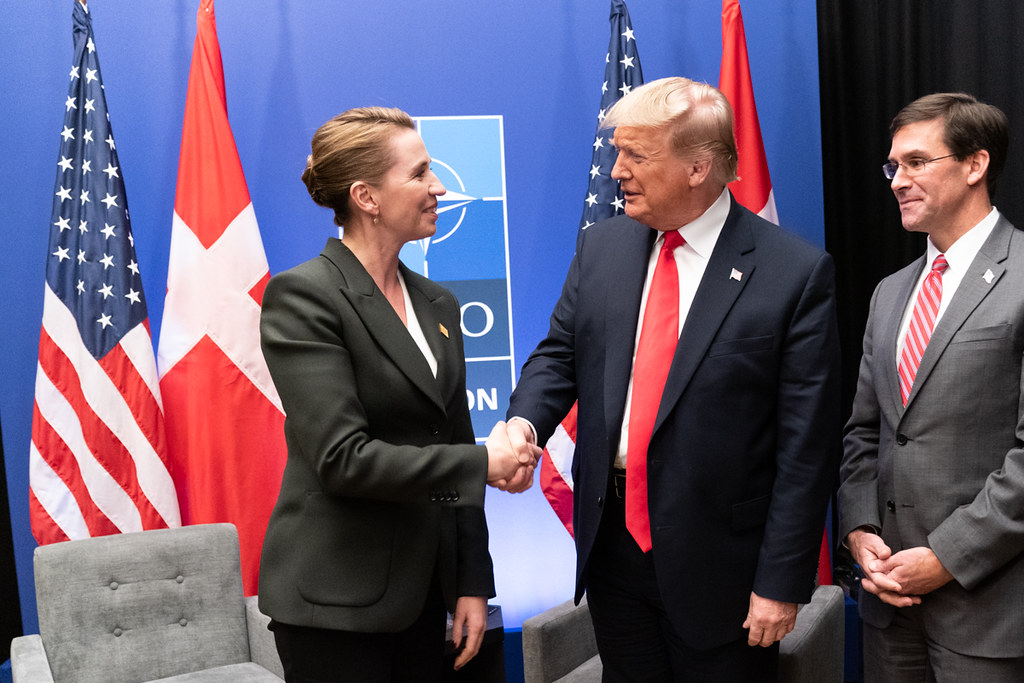
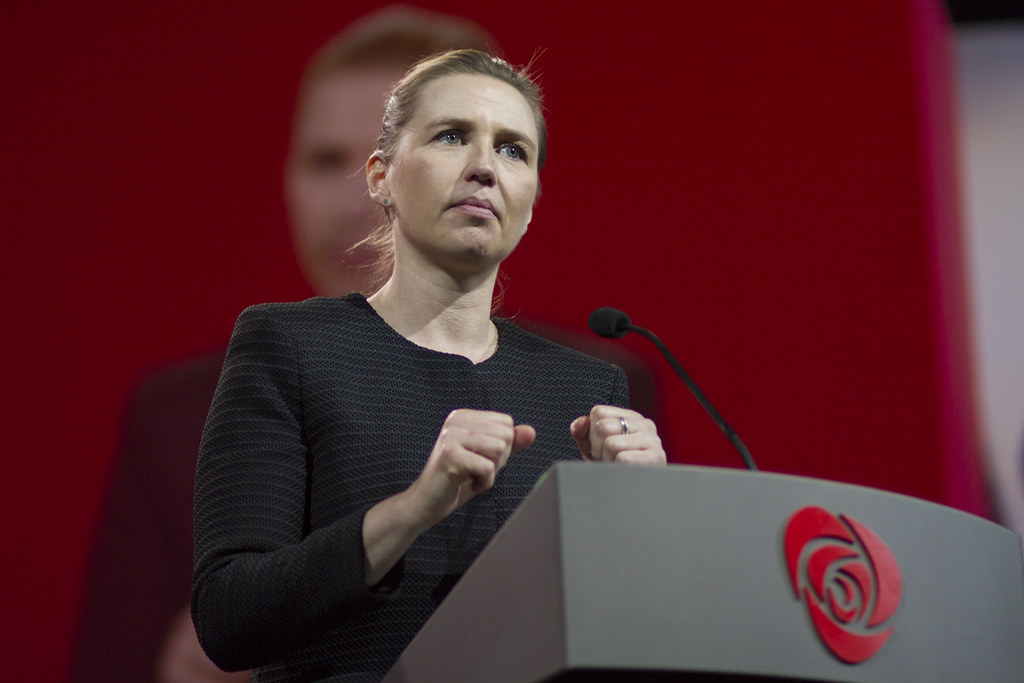
The most dramatic result came in Denmark, where Prime Minister Mette Frederiksen – who had called a snap election partly riding a wave of national pride after Donald Trump threatened Greenland – offered her resignation after her Social Democrat Party (SD) recorded its worst vote share since 1903.
Read more: Greenland emerges as new focus of U.S. geopolitical ambitions
But, a grinding cost-of-living crisis ultimately weighed heavily on voters.
Despite the historic losses, the Social Democrats remain the largest party in the country, meaning Frederiksen could still secure a third term. She has since signalled her willingness to stay on, saying Denmark “needs a stable government” in an “unsettled world”.
Meanwhile, King Frederik X asked her to lead coalition negotiations, with the socialist Green Left and the Danish Social Liberal Party as potential allies.
Another crucial voice in negotiations will likely be the Moderates, led by Lars Løkke Rasmussen, whose centre-right party have been deemed as “kingmakers” in coalition talks.
A swing back to the centre?
Across other contests, a similar story began to emerge: the populist right made real gains almost everywhere, but so did the centre – which proved more resilient than many had predicted.
The elections held in France and Germany have drawn particular scrutiny internationally. France’s local elections, seen as a possible barometer for next year’s presidential race – when incumbent President Emmanuel Macron will be standing down after serving two consecutive terms – showed Marine Le Pen’s National Rally winning 310 municipalities, including Niece.
However, the party fell short in its biggest targets: Paris went to the Socialist Party’s Emmanuel Grégoire, while the left held on in Marseille, Lyon, and Lille.
Macron’s centrist Renaissance party won in Bordeaux, and Le Havre went to former Prime Minister Édouard Philippe – a result that may clear the path for his rumoured presidential run.
Meanwhile, in Germany, the state election in Rhineland-Palatinate was one of several contests in what Germans are calling a Superwahljahr – a super election year: the far-right Alternative for Germany (AfD) posted record results, finishing third with 20% of the vote; the centre left Social Democrats (SPD), which had governed in the region for 35 years, suffered what commentators deemed an “existential defeat”.
Regardless, Chancellor Friederich Merz’s Christian Democratic Union (CDU) came out on top with 30.8% – a reassuring result after an earlier loss in the southwestern state of Baden-Württemberg, where the Greens prevailed and the AfD nearly doubled its support.
The tightest race took place in Slovenia, where liberal Prime Minister Robert Golob narrowly defeated right-wing populist Janez Janša (28.5% to 28.1%) in what is being described as the closest result in the country’s history.
Here, the campaign was marked by allegations of corruption and foreign interference, and the margin will unsettle centrists watching Hungary’s upcoming election closely; Janša is a close ally of Hungarian Prime Minister Viktor Orbán.
The Trump factor
Whilst the populist right continues to enjoy a surge in support, the picture on the whole appears to show the centre and centre-left managing to claw back victory from the jaws of defeat.
Various commentators have suggested that though the competition remains tight, this round of elections has demonstrated that pro-European, liberal, and centrist voices can still prevail, so long as “mobilization is high and stakes are clearly defined.”
Particular emphasis has been placed on the impact that Trump has had on the polls, with the conflict in Iran proving deeply unpopular across Europe – especially for the Danish.
“Frederiksen turned Trump’s threats on Greenland into the strongest pro-European message of the year,” Romanian MEP Vlad Voiculescu told POLITICO.
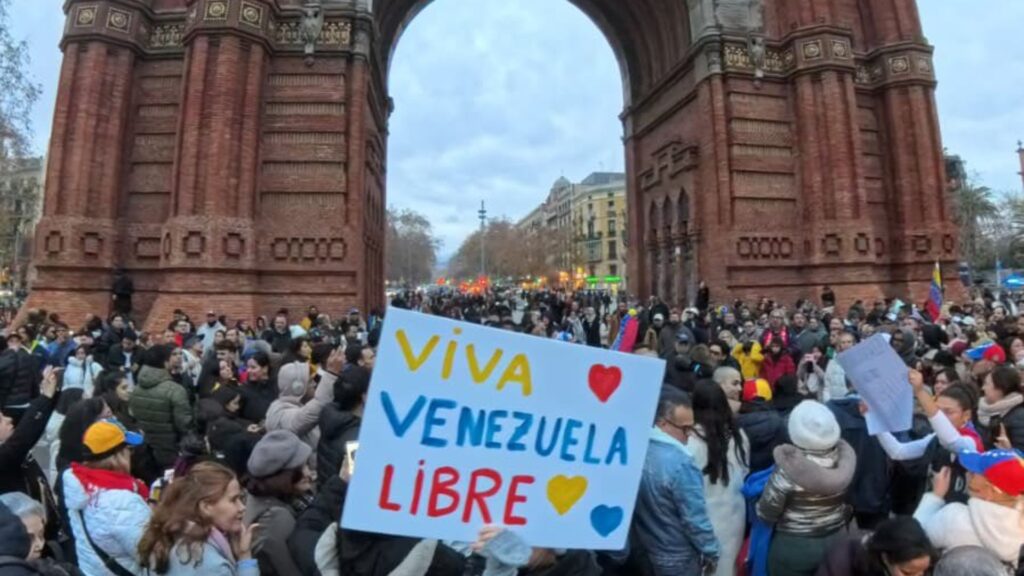
This ‘Trump effect’ appears to have held just as true outside of Denmark; even the AfD in Germany has been quietly distancing themselves from Trump and the MAGA movement since Trump’s intervention in Venezuela in January, and his comments on Greenland, as have other notable Trump allies across Europe, like as Italy’s Prime Minister Giorgia Meloni.
“We have noted with great concern the attacks by Israel and the USA on Iran,” stated AfD leaders Alice Weidel and Tino Chrupalla. “International law and international humanitarian law must be fully respected. The renewed destabilization of the Middle East is not in Germany’s interest and must be stopped.”
What comes next
A key aspect to this round of elections has been political fragmentation on both the far left and right, as well as instances in which parties have worked together to achieve shared goals.
“The key takeaway is that when Europeans understand what’s at stake, they turn out. Frederiksen proved that,” Voiculescu added.
Still, these remain close races, and the results are far from a ringing endorsement of the political centre. With Hungary’s elections set for April 12, 2026 – where Orbán enjoys Trump’s full backing – and further votes expected later this year in eastern Germany, where the AfD is at its strongest, the pendulum could yet swing the other way.
Featured image: Mette Frederiksen hilser landsmøtet
Author: Sandra Skillingsås, Arbeiderpartiet
Source: Arbeiderpartiet via Flickr
Creative Commons Licenses