

Barcelona, Spain – The largest region in Spain is set to form a coalition government between the centre and far-right after an election campaign characterised by agricultural concerns and set against the backdrop of Spain’s defiance of U.S. President Trump.
The conservative Partido Popular (PP) party, led at the regional level by Alfonso Fernández Mañueco, won 33 seats on Sunday, March 15, with a vote share of 35.5% – a 4% increase from 2022. They need 42 seats to form an absolute majority, and will now seek to form a pact with other political parties.
The second-largest party, with 30 seats, is the socialist PSOE party, who govern Spain at the national level. They increased their vote share by just 0.7% from 2022, but won two more seats.
The far-right Vox party came in third place with a vote share of 18.9% and 14 seats, winning one more seat as compared to the 2022 elections. From 2022 to 2024, the PP governed in coalition with Vox.
Commentators are now analysing what the results and trends of this election could predict ahead of the country’s general elections, set to take place in 2027.
Spain is split into 17 autonomous communities (comunidades autónomas), regional divisions of the country that have their own local governments and elections. The degree of devolved power that these local governments have differs in each comunidad.
Castilla y León is the largest region in Spain, with an area of over 94,000 square kilometers – but is only the sixth most populated. The PP has governed the region since 1987.
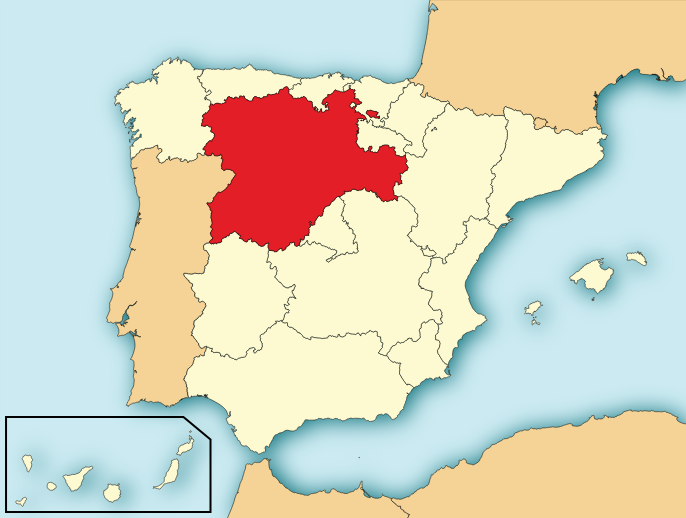
Wikimedia Commons
Creative Commons Licenses
This electoral campaign, however, was characterised by the issues of depopulation, underinvestment and the ongoing farmers’ opposition to the Mercosur trade agreement, which many Spaniards say will harm their businesses. Vox campaigned heavily in the largely agricultural region on “breaking” the Mercosur agreement.
Read more: EU pushes Mercosur Trade Pact as raw-materials ethics loom large
According to journalist Juan Navarro, who spoke on the daily news podcast Hoy en el País on March 13, many voters who had been lifelong PP voters planned on switching to Vox for these elections. He predicted a “tremendous” “hidden vote” for the party, which, despite not having the power to reject the Mercosur agreement, “appeals to the anger of people who feel abandoned by Brussels.”
Vox, whose leader is closely aligned with President Trump and Hungarian Prime Minister Viktor Orbán, did increase their vote and seat share moderately in these elections, but underperformed against many surveys – which had predicted they would get between 16 and 21 seats.
Parties further to the left of PSOE, such as Izquierda Unida (United Left), Sumar and Podemos, also lost votes, with the far-left bloc achieving just 2.9% of the vote. This marks their worst result in the region’s history.
There were also a number of regionalist parties that took part in this month’s elections, including Por Ávila and Soria ¡Ya!, but their collective vote share also dropped. Por Ávila and Soria ¡Ya! each achieved one seat, with Soria ¡Ya! losing the two seats they had won in the 2022 elections.
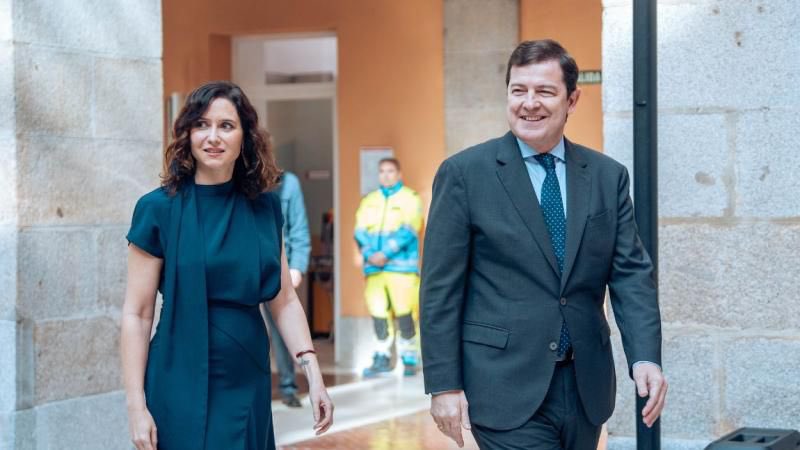
Featured image: President of Castilla y León Alfonso Fernández Mañueco and President of the Community of Madrid Isabel Días Ayuso.
Image source: Isabel Días Ayuso via X.