
Spain’s proposal to restrict social media access for users under the age of 16 has triggered immediate and polarized reactions across the Spanish public, exposing deep divisions over child protection, digital rights, and the role of the state in regulating online spaces.
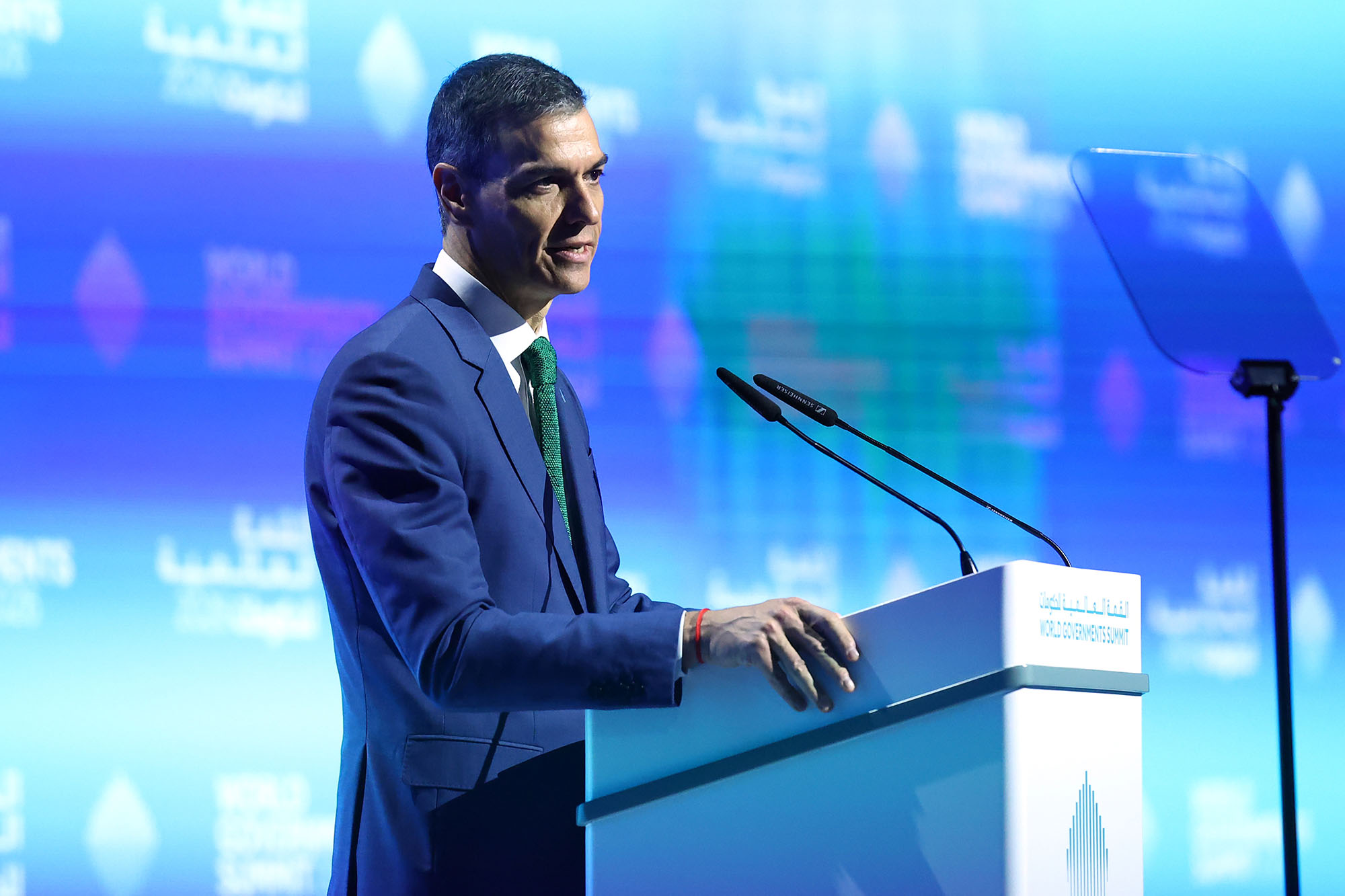
The initiative was announced on February 3, 2026 by Prime Minister Pedro Sánchez during the World Governments Summit in Dubai, where he argued that current platform practices have left children exposed to environments marked by addiction, abuse, pornography, manipulation, and violence.
Although it is still awaiting approval by the Spanish Parliament, the proposal would place responsibility on digital corporations to verify users’ age before granting access to their platforms.
Online discourse
The news on Sánchez’s plan spread rapidly across online spaces. Public debate centers on whether the policy is a legitimate form of protection or an unjustified restriction on freedom of expression.
Supporters—mostly consisting of parents, educators, and child-protection advocates—have deemed the initiative necessary in today’s society, echoing the government’s sentiment regarding child safety, and arguing that existing safeguards have failed to protect minors from current digital ecosystems. They say these spaces are largely built around exploitative engagement models designed to profit from youth engagement
Those backing the restriction contend that early and unsupervised social media use is linked to rising levels of anxiety, depression, addiction, exposure to disinformation, and online harassment among young users, framing the proposal as a long-overdue response to risks that have gone largely unaddressed.
Critics, however, have described it as a form of censorship, warning that it risks normalizing tighter controls over digital communication by preventing underage users from participating in public conversations, accessing crucial information, and finding community in online social spaces.
Others question whether an age-based ban meaningfully addresses the dangers associated with social media, or rather simply acts as a superficial solution that fails to tackle underlying issues, including gaps in digital literacy education, insufficient mental-health resources, and the uneven role of families and schools in guiding online behavior.
To back this claim, some experts note that evidence directly linking social media consumption to a youth mental-health crisis remains inconclusive, cautioning against conflating correlation with causation.
Responses from technology figures
The controversy only intensified when prominent technology executives entered the debate.
Elon Musk, owner of social media platform X, publicly accused Sánchez of authoritarianism, calling him a “tyrant” in posts that quickly gained traction online.
Meanwhile, Telegram founder Pavel Durov also criticized the proposal, describing strict content moderation obligations and mandatory age-verification systems as a set of “dangerous regulations” that could establish a precedent for identity tracking, and potentially silence political dissent, journalistic commentary, and other legitimate forms of expression.
In response, Sánchez claimed that backlash from powerful tech figures was a sign that the government was moving in the right direction.
Political stances
Political reactions within Spain have been mixed, reflecting broad divisions in Parliament. The center-right Popular Party has voiced support for restricting minors’ access to social media, aligning with Sanchez’s left-wing government on the need for stronger child-protection measures online.
By contrast, the far-right Vox party has come out firmly against the initiative, accusing the government of using child safety concerns as a pretext to exert greater control over online speech and public debate.
Speaking at a press conference, Vox spokesperson Pepa Millán argued that the policy reflects the government’s hidden intent to shape media narratives and shield itself from criticism on social media platforms.
Despite partial cross-party agreement, the proposal’s path through Parliament thus remains uncertain. Spain’s legislature is highly fragmented, and Sánchez’s governing coalition does not hold an outright majority, meaning the measure would still require negotiated support from multiple parties to move forward.
Questions over enforcement
Beyond political disputes, attention has increasingly shifted toward practical matters of enforcement.
Many have questioned how age-based restrictions could possibly be implemented without compromising sensitive personal data, which platforms would ultimately be affected by these regulations, and whether minors might simply migrate to offshore online spaces where risks are higher and moderation is lower.
With the proposal still under development and awaiting approval, these doubts highlight that the government’s approach remains a work in progress, with further details expected in the weeks ahead.
Featured image: Pedro Sánchez, President of the Government of Spain, during his intervention at the World Governments Summit
Source: La Moncloa
Author: Pool Moncloa/Fernando Calvo