

Kharkiv, Ukraine – Authorities in Hungary and Slovakia announced they were blocking diesel exports to Ukraine on Wednesday, February 18, after oil transit through the country was suspended on January 27 following damage to the Druzhba oil pipeline by a Russian drone strike.
Hungarian Foreign Minister Péter Szijjártó accused Kyiv of “political blackmail” due to the country’s inability to resume the flow of oil, going on to say that it was “a political decision made by the Ukrainian president himself”.
Following a request by the governments of Hungary and Slovakia, the European Commission has also requested a timeline from the Ukrainian authorities for when the Druzhba pipeline will be repaired.
In accordance with European law, both countries hold 90 days’ worth of reserve stock in case of oil shortages and are therefore not at risk of supply issues in the short-term. Regardless, the Slovakian government has declared a state of emergency effective from February 19, and released 250,000 tons of oil from its strategic reserves.
Officials from the two countries also requested that fellow EU member Croatia import Russian oil for transit to them through the country’s seaports and the Adria pipeline.
Although the import of Russian oil by EU states is banned under the bloc’s sanctions regime, the two countries negotiated exemptions. In requesting Croatian assistance, Szijjártó claimed Croatia would also be covered by this exemption, as it would be importing oil on behalf of the two states.
The countries’ request was turned down by the Croatian authorities due to the risk of breaching both EU and U.S. sanctions against Russia. Croatian Economy Minister Ante Šušnjar also noted that the country was able to import oil from any other country, stating that “the Adria pipeline is ready, so there are no technical excuses left for staying tied to Russian crude for any EU country”.
The Hungarian government, known for its sympathetic stance towards Russia, has long been a vocal critic of Ukraine as it seeks to defend itself from Russia’s full-scale invasion – with Prime Minister Viktor Orbán recently calling the country an ‘enemy’ state.
Such rhetoric has only increased as the country moves closer to parliamentary elections this April, in which Orbán is expected to lose.
Read more: The end for Orbán?: Europe looks ahead to Hungary’s elections
Ukraine has continued to allow the transit of Russian oil through the country due to its contractual obligations under a 2019 agreement. The agreement, which is valid until 2029, is similar to a gas transit agreement which expired at the start of 2025.
To comply with Ukrainian sanctions against Russian oil firms, the Hungarian MOL Group takes ownership of oil at the Belarus-Ukraine border prior to its transportation across the country.
Despite being in the midst of a severe energy crisis caused by Russia’s continued strikes against Ukraine’s energy facilities, the suspension of diesel exports from Hungary and Slovakia is not expected to significantly affect fuel prices in the country.
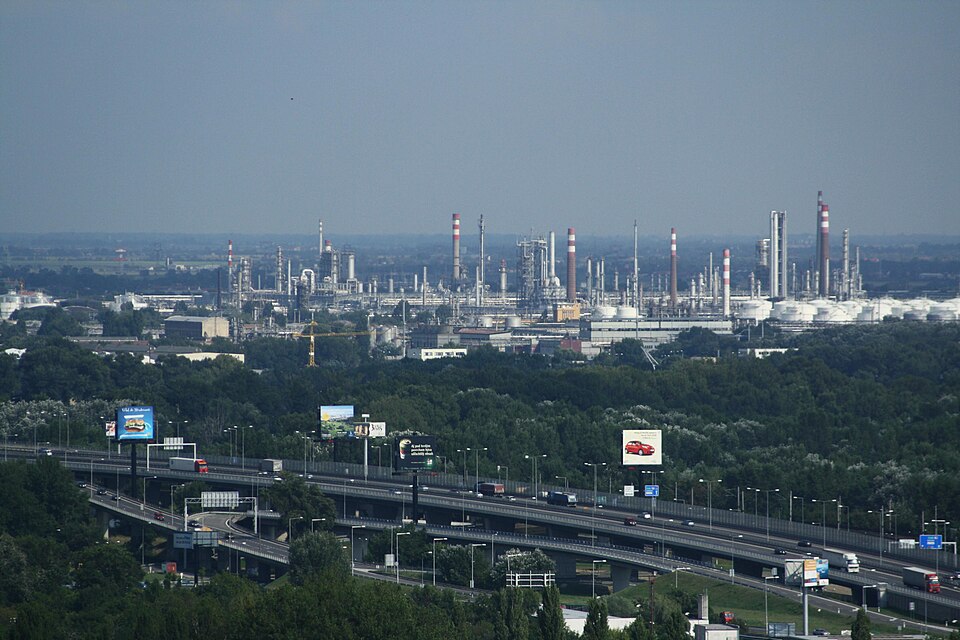
Featured image: View of Slovnaft Refinery in Bratislava, via Wikimedia Commons