
London, UK – While the U.S. organised its first-ever Critical Minerals Ministerial earlier this month to secure essential supply chains and reduce dependency on China, EU commitment to obtaining similar supply chains is less evident. The Union, in fact, has left the EU-Mercosur deal unratified and in limbo.
While the Union vowed to mitigate the risks for supply chains and reduce its strategic dependencies in May 2024 – via the Critical Raw Materials (CRM) Act – Latin America, and therefore Mercosur countries, have been of increasing importance, as the home to 25 of the 34 materials on the EU’s list.
By 2030, the EU aims to ensure that no more than 65% of its annual consumption of any strategic raw material – at any stage of processing – comes from a single third country.
Such goals are to be delivered in part by the EU-Mercosur agreement, which would create a trading bloc between the EU, Brazil, Argentina, Paraguay, and Uruguay.
The deal offers an opportunity for the Union to stake its claim and obtain critical mineral supply chains for its green transition, as well as technology and defense industries.
Amongst the Latin American countries that form a part of Mercosur, Argentina is not alone in gaining global attention for its critical mineral resources. Brazil has also courted the attention of the U.S., Europe and China, who are all in competition for deals with the country, home to the second-largest critical mineral reserves in the world.
Brazil therefore holds some of the cards, as a nation among the top ten producers of nickel, manganese, niobium, iron ore, and bauxite – and which has rapidly gained ground in the production of lithium, natural graphite, rare earth elements, vanadium, and copper.
Though Brazil has held preliminary discussions on the matter with the U.S., President Luiz Inácio da Silva has shown reluctance to engage further; most recently, he declined to attend the U.S. Critical Minerals Ministerial, viewed by some as a consequence of Lula’s historic promise to ensure the country’s “national sovereignty” over resources.
In his pursuit of greater multilateralism, Lula and Indian President Narendra Modi have signed a critical minerals agreement. Meanwhile, the Brazilian president is also a diehard adherent of the proposed EU-Mercosur trade agreement – meaning that the EU could have a chance in securing reliable supply chains.
However, the proposed deal is now 25 years in the making as a result of internal division in the EU; scepticism on the part of member states like France, Poland and Italy has been an encumbrance, but could this change due to geoeconomic reasons?
The sluggish progress of the EU-Mercosur deal
If implemented, the EU–Mercosur agreement would reduce EU import tariffs on raw materials, curb tariff escalation that discourages value-added exports, and relax restrictions for European companies investing in local mineral refining and processing. It would also grant EU firms rights of establishment within Mercosur countries, facilitating investment and operations there.
However, while the EU stalls on the EU-Mercosur deal, its main detractor, France, attended President Trump’s Critical Minerals Ministerial alongside other European nations.
Namely, leaders from Belgium, Finland, Germany, Greece, Romania, Ukraine and the United Kingdom attended the landmark conference.
France has also committed to talks with India over critical minerals as a means to diversify critical mineral supply chains; India is home to nearly 7 million tons of critical minerals, following Brazil (21 million tons) and China (44 million tons).
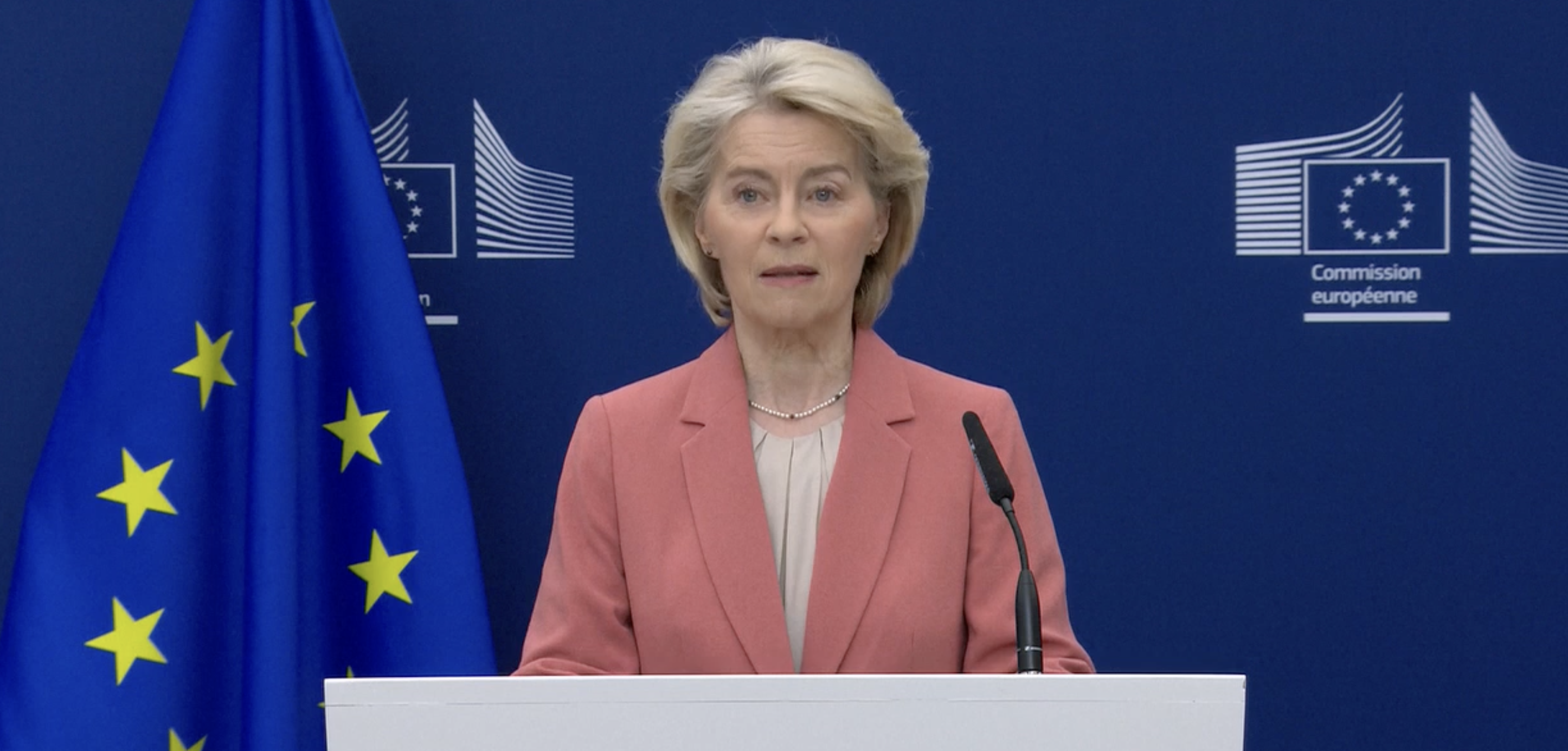
Meanwhile, European Commission President Ursula Von der Leyen continues to emphasise the Union’s need to achieve strategic independence at a time when minerals could become a future instrument of coercion.
At the World Economic Forum (WEF) 2026, Von der Leyen pledged to “speed up work on critical raw materials partnerships with countries like Ukraine and Australia, Canada, Kazakhstan, Uzbekistan, Chile and Greenland.”
Once again, the deal has been left pending. While Von der Leyen described her recent visit to Paraguay to sign the trade agreement as a “breakthrough after 25 years of negotiations” at the WEF, the agreement remains unratified – despite its last details allegedly finalised in January 2026.
U.S. makes moves to secure its critical mineral supply chains
The U.S. launched its first-ever Critical Minerals Ministerial on February 4, 2026, hosting over 50 countries in order to reduce dependence on China.
The move is part of U.S. President Donald Trump’s launch of a strategic minerals stockpile for the country, dubbed Project Vault. It marks the White House’s latest attempt to invest in rare-earth minerals needed in the production of goods such as semiconductor chips, smartphones and electric car batteries.
And, while Project Vault has invested $1.6 billion USD in funding allocated under the CHIPS Act – legislation passed under former President Joe Biden – Trump has since bought equity in a number of related firms: from a 15% investment in MP Materials, operating in California as the only currently active rare-earth mine in the U.S., to evaluating an 8% share in critical minerals for a stake in the Tranbreez rare-earths deposit in Greenland.
U.S.-Argentina Trade Deal Shores Up US Critical Mineral Supply Chain Security
Pressure is now on Europe to seal the EU-Mercosur deal, especially as the U.S. and Argentina have formed a critical minerals agreement – whereby joint actions would aim to promote Argentina’s position as a key player in high-strategic value global supply chains.
The agreement pledged to position mining, particularly of critical minerals lithium and copper, as a key sector.
A day following the signing of the critical minerals agreement, on February 5, a new United States–Argentina Agreement on Reciprocal Trade and Investment (ARTI) was made public.
Amongst its terms, one clause ensured that Argentina’s critical minerals resources are now committed to a framework ensuring fairer rules for U.S. firms. Another stipulation encourages Argentina to address potential distortionary actions that state-owned enterprises or industrial subsidies have on the bilateral trading relationship.
Together, these terms give the U.S. preferable treatment in the trade of critical minerals between the two countries.
With the EU holding back on the EU-Mercosur Deal, will it be able to catch up with the U.S., whose Critical Dominance Mineral Act is making significant inroads into securing critical mineral supply chains globally?
And, especially in Latin America – where the EU could have secured strategic partnerships before the U.S. – will confidence be restored?
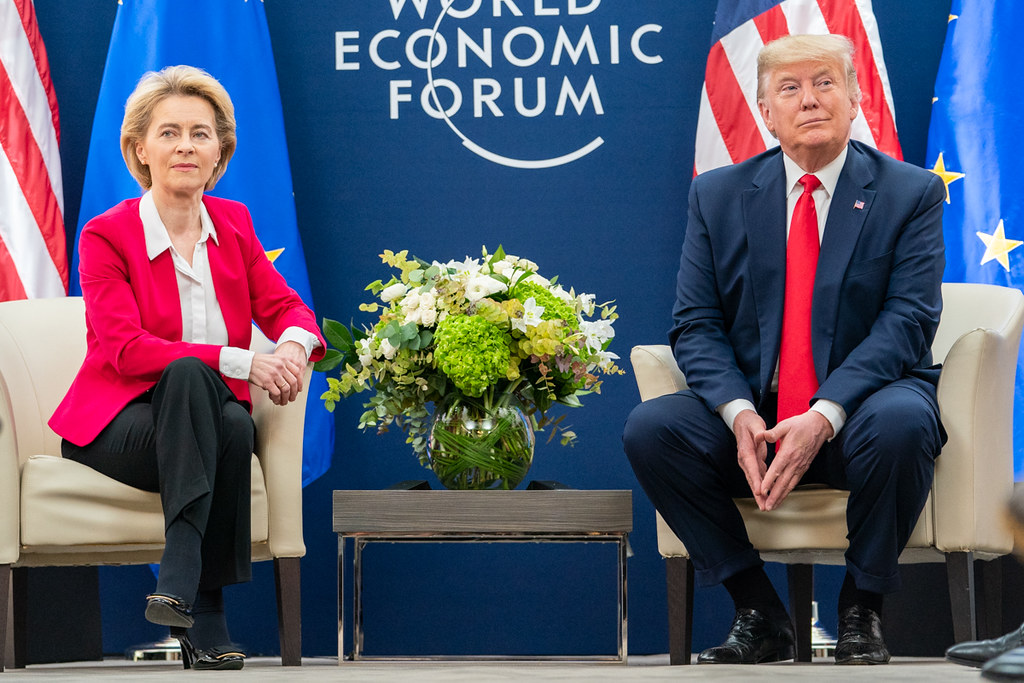
Featured image: President Donald J. Trump meets with the President of the European Commission Ursula von der Leyen.
Source: Trump White House Archived via Flickr
Author: Shealah Craighead
Creative Commons Licenses