

Glasgow, Scotland – A petition brought by former diplomat Craig Murray to Scotland’s Court of Session asking for a judicial review of the ban on Palestine Action has been approved.
Murray brought the petition to court on January 12, , arguing that proscription should not be implemented without consultation of those affected, and that the ban of Palestine Action in Scotland interferes with rights to freedom of expression and freedom of association.
“[The judgement] offers real hope that the judicial review scheduled for 17–18 March will halt this escalating madness by challenging the wholesale arrests of peaceful protesters,” said Mick Napier, spokesperson for the Scottish Palestine Solidarity Campaign (SPSC) in a press release.
The March hearing will take place at the Edinburgh Court of Session. If the appeal is successful, Palestine Action will cease to be a proscribed organization in Scotland, a constituent nation of the United Kingdom.
Palestine Action is a direct-action group, which has previously targeted factories and institutions linked to Elbit Systems, the primary weapons supplier to the Israeli Defence Forces. In July 2025, then-Home Secretary Yvette Cooper added the group to the list of proscribed organizations under the Terrorism Act 2000.
The proscription came following a break-in at the Royal Air Force Brize Norton base, where activists allegedly sprayed two aircrafts with red paint to protest the RAF’s spy flights over Gaza.
Read more: UK hunger striker begins thirst strike: “They will be held to account”
In Britain, it is illegal to be a member of or express support for proscribed organizations, with a maximum sentence of 14 years in prison. There is currently an ongoing judicial appeal to the proscription in England and Wales.
Scotland operates under a separate legal jurisdiction, so rulings for England and Wales would not apply.
Freedom of Information requests released in October 2025 show that the Scottish counter-terrorism board declared in a meeting that Palestine Action’s activities were “not close to meeting the statutory definition of terrorism.”
Many have protested the proscription by holding signs reading “I oppose genocide / I support Palestine Action,” which resulted in their subsequent arrest. Over 2,700 people have been arrested in the country, according to Defend Our Juries, the organization spearheading the campaign to “lift the ban.”
As of November 2025, over 20 people in Scotland had been arrested on terrorism charges regarding alleged connections to Palestine Action.
“Since the proscription of Palestine Action came into effect, hundreds of people have been treated like terrorists for holding banners and bits of paper while Ministers have continued to cozy up to the apartheid regime in Israel. It would almost be laughable if the consequences weren’t so severe,” said Scottish Greens MSP Maggie Chapman in response to news of the judicial review.
NGO Amnesty International has also spoken out against the proscription and the arrest of Palestine Action supporters, which they describe as “a violation of the UK’s international obligations to protect the rights of freedom of expression and peaceful assembly.”
The organization further notes that this ban comes after years of legislation that restricts the right to protest in the UK; notably, the Policing, Crime, Sentencing, and Courts Act 2022 and the Public Order Act 2023. These acts expanded the scope for protests to be declared illegal by criminalizing peaceful protest tactics such as blocking roads, locking on, and obstructing major transit works.
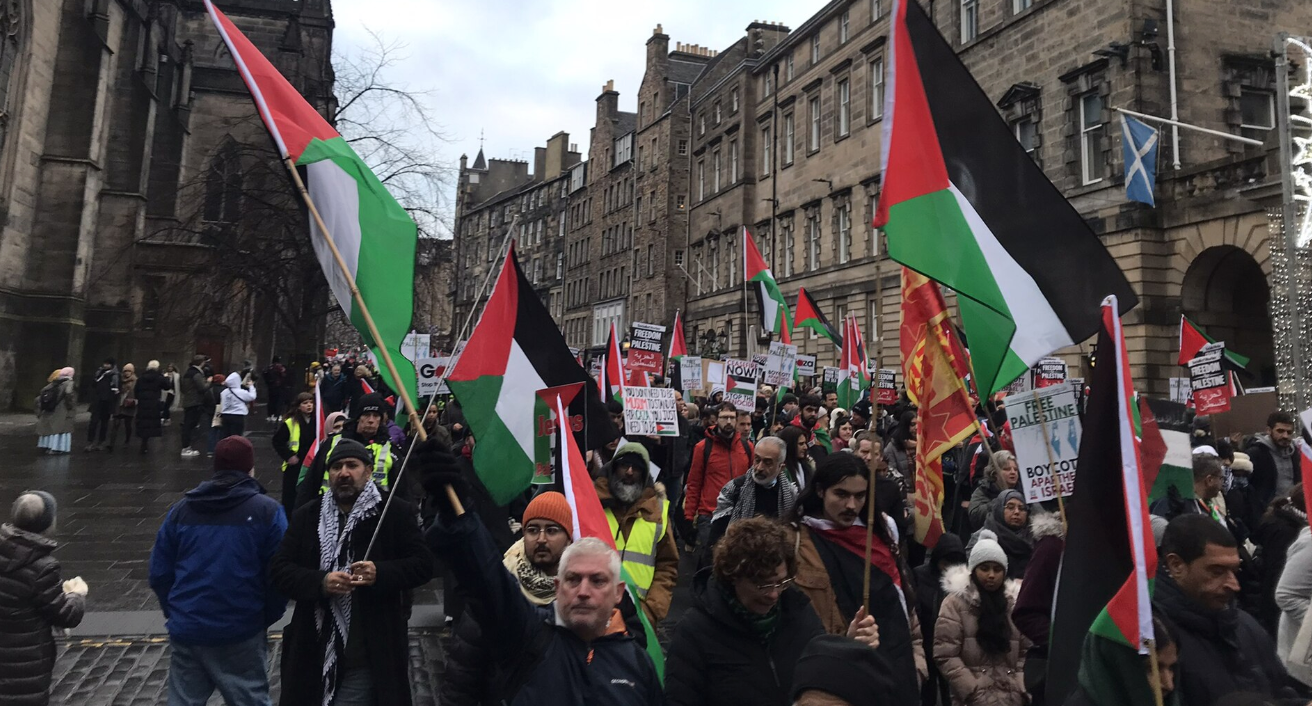
Featured image: Pro-Palestine demonstrators marching on the Royal Mile
Source: Pretzelles via Wikimedia Commons
License: Creative Commons Licenses