
London, UK – Ukraine’s National Anti-Corruption Bureau (NABU) uncovered one of the country’s largest wartime corruption schemes on November 10, 2025.
Conducted under the codename Midas, the investigation began in the summer of 2024 and stretched over 15 months. In its final stage, it mobilized the full force of detectives from NABU, culminating in more than 70 searches, roughly 1,000 hours of audio recordings, and documentation suggesting that approximately $100 million USD moved through the corruption scheme.
Midas became one of the largest and most successful anti-corruption operations carried out by NABU in cooperation with the Specialized Anti-Corruption Prosecutor’s Office (SAPO) and the Security Service of Ukraine (SBU) since the institutions were established in response to Ukraine’s entrenched oligarchic corruption in 2014.
The operation uncovered a scheme at Energoatom, Ukraine’s state nuclear power operator, in which contractors were forced to pay kickbacks, with funds funneled through back‑office accounts. The scheme involved former Energy Ministers Herman Halushenko and Svitlana Hrynchuk, as well as Ukrainian‑Israeli businessman Tymur Mindich.
In an exclusive interview with EU Reports, Ihor Chalenko, head of the Center for Analysis and Strategies (CAS) think tank, described the Midas case as an instance where Ukraine’s anti-corruption machinery worked in an unprecedentedly logical and structured manner, demonstrating the autonomy of these anti-corruption institutions and their operational effectiveness.
Corruption has always existed
Since the Revolution of Dignity- a wave of anti-corruption and anti-oligarchy protests that swept Ukraine from November 2013 to February 2014- NABU has come to symbolise Ukraine’s pro-European society and its aspirations for a transparent future.
Despite the bureau’s efficiency and transparency in fighting corruption, however, questions remain on why corrupt practices persist within Ukraine’s government structures.
Unlike previous corruption scandals, Midas– which directly involved the Ukrainian critical energy sector- became one that jeopardized the legitimacy of President Volodymyr Zelenskyy’s government.
It also raised questions about transparency and undermined public trust both at home and abroad during a particularly challenging period for modern Ukrainian society.
Chalenko explained that throughout Ukraine’s years of independence, corruption has always existed in the form of shadow influence, exerting forceful power over most institutional structures, public administration, and government policy:
“Any political conflicts occurred primarily over changing the supervisors who controlled the flows rather than eliminating corruption and shadow schemes themselves.”
The figures involved in the Midas case included government officials such as Herman Halushenko and Svitlana Hrynchuk, both former ministers of energy.
Another key figure was Ihor Myronuk, a former adviser to Halushenko and previously a personal assistant to Andriy Derkach, a pro-Russian politician who fled Ukraine after the 2022 full-scale Russian invasion began. Myronuk now serves as a senator in the Russian Federation.
Yet, the most prominent figure remembered by Ukrainian society is Timur Mindich, known under the codename “Karlson” in the scheme.
Mindich, a Ukrainian businessman and co-owner of the Studio 95 entertainment production company- which was originally founded by Zelenskyy in 2003- left the country just a few hours before the Midas raid.
However, according to the State Border Guard Service, his departure was fully legal. His current place of residence remains unknown.
“The main challenge continues to be ensuring the inevitability of punishment, as yet again shown by another corrupt official who was able to flee abroad without any hindrance,” said Victoria Vyshnivska, senior researcher at the Independent Anti-Corruption Commission (NAKO), while in conversation with EU Reports.
Mindich gained national recognition throughout Zelenskyy’s presidency, as the head of state’s close friend. He has also been known, however, as one of the most shadowy influencers in governmental structures and public policy.
His infamous role in the Midas case earned its own label: “Mindich-gate”, which circulated in Ukrainian media as a shorthand for the scandal.
A return to oligarchy
The term “oligarchy” has once again returned to mainstream Ukrainian discourse to describe the shadow influence over the country’s political structures.
According to Chalenko, Mindich can be seen as embodying the informal institution of overseers in the Midas case.
While previous oligarchic structures left behind several shadow figures, Mindich was directly linked to leveraging his presidential friendship and connections to gain access to key state institutions and controlling shadow business- particularly in the energy sector.
“In Ukraine, [Mindich] became a political instrument, just like with previous presidents; he became Zelenskyy’s business partner, similar to how Oleh Hladkovskyi was a business partner of former President Petro Poroshenko,” said Chalenko.
Oleh Hladkovskyi was dismissed from his position as First Deputy Secretary of the National Security and Defense Council (NSDC) in 2019 following a corruption scandal involving the Hladkovskyi family and Ukraine’s state-owned defence industry conglomerate (Ukroboronprom).
With the state-owned enterprises remaining the most vulnerable to shadow institutional influence, the Midas scandal hit Ukrainians differently, as the energy sector has been crucial during wartime.
Those who were implicated in the case have been effectively removed from their posts, such as the president’s right-hand lawyer and former Office of the President head Andriy Yermak.
As of now, however, Zelenskyy has not appointed a new energy minister.
In an interview with Britain’s Channel 4 News, he equated corruption to state treason, following a two-day delay in responding publicly to the Midas scandal.
Andrii Biletskyi, anti-corruption expert and associate at the UK-based Policy Practice Limited consulting group, told EU Reports that Midas revealed serious problems in corruption prevention, especially within state-owned enterprises.
“At Energoatom, Ukraine’s state-owned nuclear energy company and the main site where funds were siphoned in the Midas scandal, there was formally a position to minimize corruption risks. But, in practice, it proved insufficient and needs significant improvement,” he said.
International reactions
The international response was swift. Speaking on the sidelines of a Group of Seven foreign ministers’ meeting in Canada on Wednesday, November 12, EU Foreign Policy Chief Kaja Kallas described the case as “extremely unfortunate.”
One of the key conditions for Ukraine to join the Union- an effort dating back over 20 years- is to eradicate corruption.
According to Biletskyi, Ukraine will undoubtedly face criticism from skeptical partners, which can further hinder the country’s international image.
At the same time, many European leaders have highlighted the positive side of these exposures, showing the effectiveness of the anti-corruption system and underscoring its importance for future international communication.
Paula Pinho, European Commission Chief Spokesperson, said in Brussels during a midday press briefing on 28 November 2025: “Indeed, we understand that there are ongoing investigations, and we have a lot of respect for those investigations which show that the anti-corruption bodies in Ukraine are doing their work”.
The case, as history has shown, revealed multiple dimensions, including the efficiency of anti-corruption structures, the electorate’s reaction to the scandal, and the ability of government institutions to act promptly and adroitly under public pressure.
Yet, for the Ukrainian anti-corruption scenario, addressing the consequences of Midas and developing preventative measures within the anti-corruption system remain more crucial than ever.
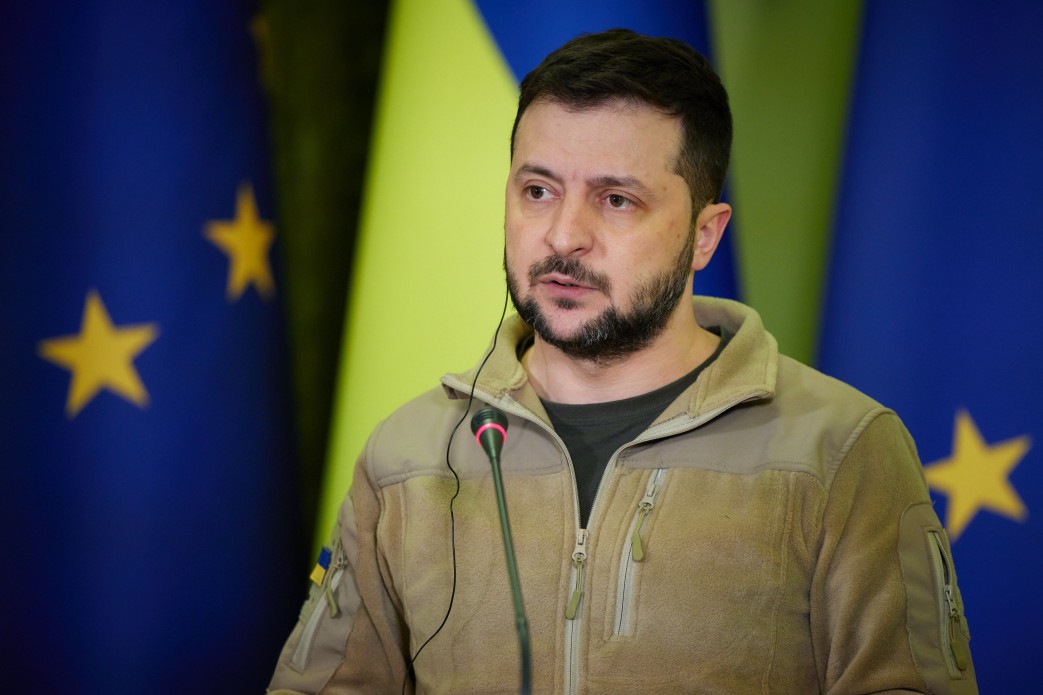
Featured image: President of Ukraine Volodymyr Zelenskyy in Kyiv during the Russo-Ukrainian War
Source: Wikimedia Commons
Author: The Presidential Office of Ukraine
License: Creative Commons Licenses